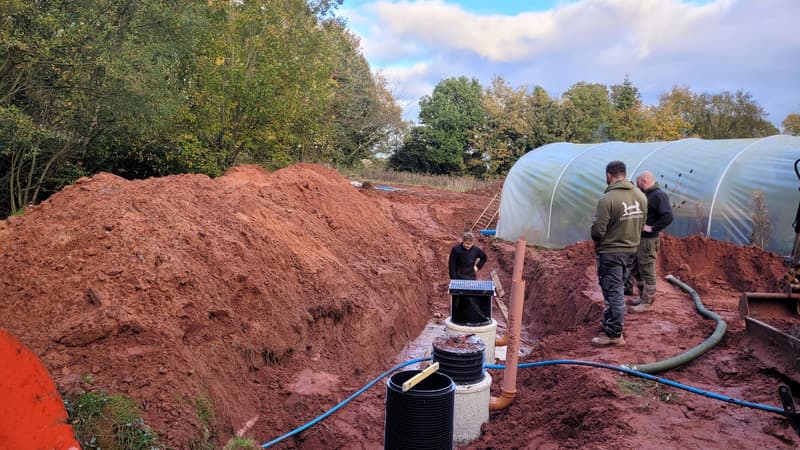
If your home isn't connected to a public sewer, your waste water goes to a septic tank or a small sewage treatment plant on your land. Keeping it working is your responsibility, and each UK nation has its own rules about where it can discharge.
Need a full replacement or a new treatment plant? Our sister site Septic Tank Quotes has detailed cost guides and local area guides for septic tank replacement and sewage treatment plant installation.
What suppliers can help with
- Emptying (desludging) by a licensed tanker.
- Servicing treatment plants: blowers, pumps and alarms.
- Surveys and CCTV of the tank, pipes and drainage field, often before a house sale.
- Repairs and replacement of tanks, plants and drainage fields.
The rules where you live
- England: small discharges that meet the general binding rules don't need a permit, but a septic tank must not discharge to surface water such as a ditch or stream (general binding rules: discharges to ground; discharges to surface water).
- Scotland: every private sewage discharge needs authorisation from SEPA. Since 1 November 2025 this has come under the Environmental Authorisations (Scotland) Regulations (SEPA).
- Wales: most septic tanks and treatment plants need a free, one-off exemption registration with Natural Resources Wales.
- Northern Ireland: a private sewage discharge needs a consent to discharge from NIEA (DAERA).
What emptying costs
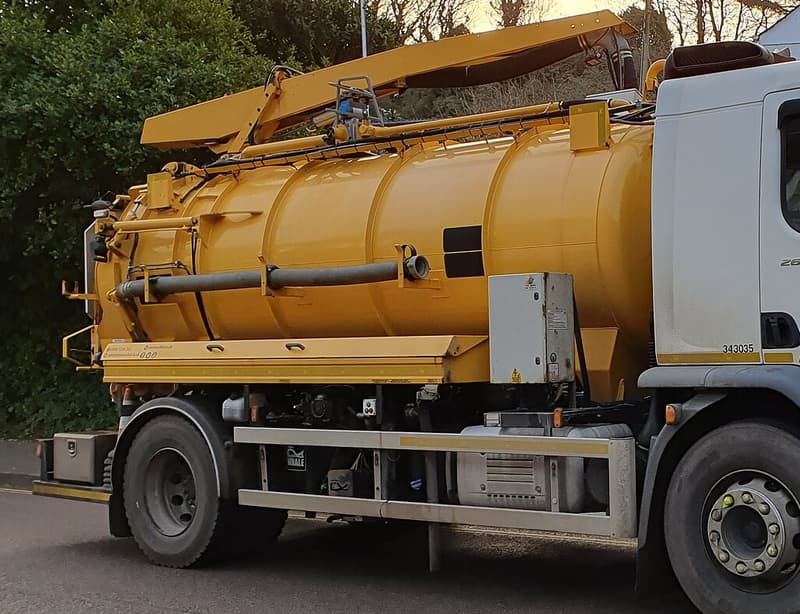
Some public bodies publish their prices. Scottish Water charges £254.40 for a scheduled household de-sludge in 2026–27 (Scottish Water). NI Water offers one free discretionary domestic empty in any 12-month period if its conditions are met, then charges £108 (NI Water scheme of charges, table 6.1). Private tanker firms set their own prices: for example, CRES Tanker Services in west Wales advertises empties from £130 (CRES).
For new equipment, merchants list 6–7 person treatment plants from about £2,192 (Marsh Ensign 6PE, Cotterill Civils) to £2,701 (Graf One2Clean 7PE, Tanks For Everything) including VAT, before installation.
Frequently asked questions
How often should a septic tank be emptied?
It depends on the tank size and how many people live in the house, so follow the manufacturer's or installer's advice. Under the rules in each nation the system must be properly maintained, and emptying is part of that.
Can I still use a septic tank that discharges to a ditch?
In England, a septic tank must not discharge to surface water under the general binding rules. You'd normally need to replace it with a treatment plant or move the discharge to a drainage field. Scotland, Wales and Northern Ireland have their own rules, so check with SEPA, NRW or NIEA.
Do you install septic tanks yourselves?
No. We're a free introduction service. We look for up to 3 local suppliers who cover your area and pass your enquiry to them with your consent.