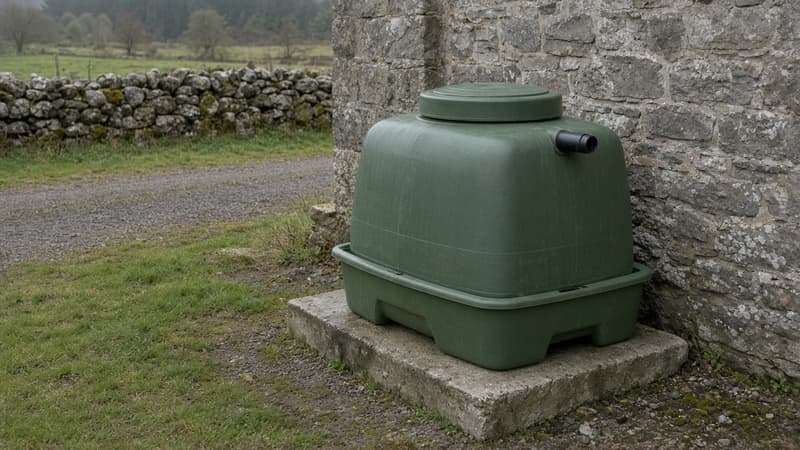
Oil is the main heating fuel for many rural homes. Census figures show how much it varies:
- Northern Ireland: 480,635 of 768,810 households had oil central heating in 2021, 62.5% (NISRA).
- Wales: 7.8% of households used oil only, rising to 35.3% in Ceredigion and 27.7% in Powys. In England the figure was 3.2% (ONS Census 2021).
- Scotland: about 5% of households use oil, but 35% in very remote rural mainland areas (Rural Exchange, Census 2022).
Oil tank rules for homes in England
For a home tank holding up to 3,500 litres, GOV.UK says the installer should assess the risk of an oil spill, and you'll need a bund (a secondary container that holds 110% of the tank's capacity) if, for example, the tank is within 10 metres of inland or coastal waters, within 50 metres of a well, borehole or spring, where spilled oil could reach an open drain, or where the tank holds more than 2,500 litres. The tank must also carry a sticker saying how to look after it and what to do if there's a spill (GOV.UK oil storage rules). Tanks of 3,501 litres or more must follow the rules for businesses. Wales, Scotland and Northern Ireland have their own building regulations.
GOV.UK recommends choosing an installer registered with a competent person scheme, so they can self-certify that the work meets building regulations (GOV.UK).
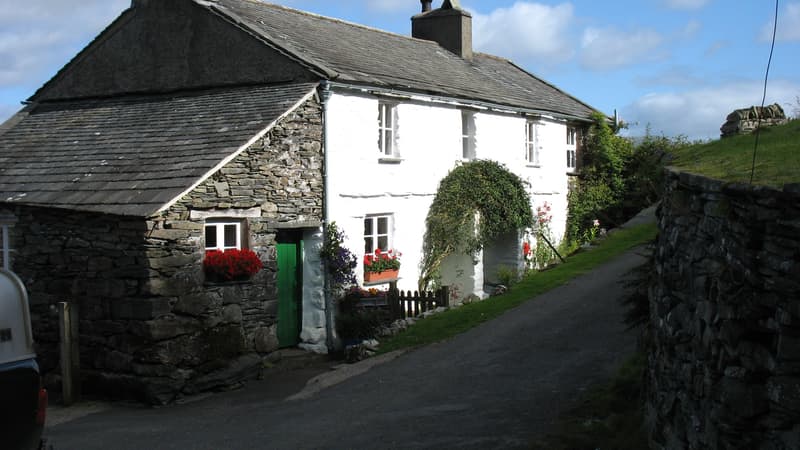
How long does an oil tank last?
OFTEC, the trade body for oil heating, says fuel tanks have an expected working life of around 20 years. It recommends a tank check at your annual boiler service and visual checks in between, particularly after extreme weather (OFTEC PUB19).
Thinking of switching?
In England and Wales, the Boiler Upgrade Scheme gives £7,500 towards an air or ground source heat pump. Until March 2027, homes heated by oil or LPG with no mains gas connection can get an extra £1,500 (GOV.UK Boiler Upgrade Scheme). Read our guide to oil vs LPG vs heat pumps.
Frequently asked questions
Does my oil tank need a bund?
In England, a home tank needs a bund in situations set out by GOV.UK, including when it holds more than 2,500 litres, is within 10 metres of water or 50 metres of a well, borehole or spring, or where a spill could reach an open drain. Your installer will do a risk assessment.
When should my oil tank be checked?
OFTEC's domestic oil storage guidance recommends a tank check at your annual boiler service, plus your own visual checks in between, especially after extreme weather.
How long do oil tanks last?
OFTEC gives an expected working life of around 20 years, but tanks can fail sooner. Look for cracks, bulging, rust or weeping, and ask your technician at each service.