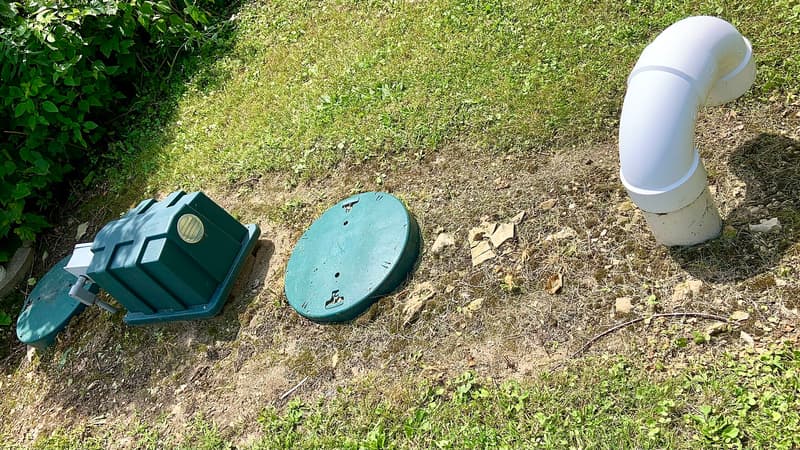
If your home isn't connected to the public sewer, your waste water goes to a septic tank or a small sewage treatment plant in the garden or a nearby field. These systems are simple and reliable when they're looked after, and expensive to fix when they're not. This guide covers how they work, how often to empty them, the rules in each UK nation and the habits that keep them running for decades.
We look for up to 3 local suppliers who cover your area, so if you need a tank emptied, a system checked or a replacement quoted, you can use the form on this page. For in-depth septic tank quotes and guides, see our sister site Septic Tank Quotes.
How a septic tank works
A septic tank is a settling tank. Northern Ireland's environment department, DAERA, describes it well: the tank holds sewage for long enough for solids to settle as sludge at the bottom, where bacteria partly break them down, and the remaining liquid leaves through an outlet pipe to a soakaway DAERA. The soakaway, or drainage field, is a network of perforated pipes in gravel trenches that lets the liquid filter through the soil.
A package sewage treatment plant goes further. DAERA explains that it treats the effluent more actively before it's discharged, and it needs a power supply DAERA. That's why a treatment plant has an air pump or motor that must keep running, and why it usually needs a regular service as well as emptying.
Both systems rely on the same thing: bacteria doing their work, and solids staying in the tank rather than escaping into the ground or a watercourse.
How often should a septic tank be emptied?
In England, GOV.UK's general binding rules say you must have the sludge removed (desludged) before it goes beyond the tank's maximum capacity, and that you should do this at least once a year or in line with the manufacturer's instructions. If you don't empty it often enough, solids are likely to be carried into the drainage field or soakaway, which can cause damage and pollution and lead to expensive, disruptive repairs GOV.UK: general binding rules.
DAERA says the right frequency depends on household size and usage DAERA. A large family in a house with a small, old tank will need more frequent empties than a couple with a modern, generously sized tank. If you've just bought a property, ask the seller when it was last emptied and keep a record from then on.
Who can empty it?
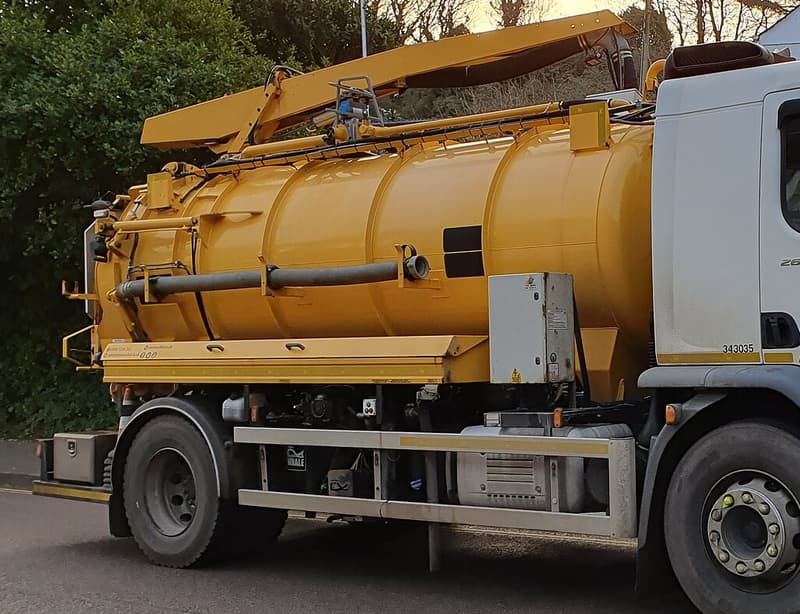
In England, the company that takes away your sludge must be a registered waste carrier. GOV.UK suggests asking the company to confirm this when you book, or asking the tanker driver for a copy of the waste carrier certificate GOV.UK.
In Scotland and Northern Ireland, the public water companies offer emptying services:
- Scotland: Scottish Water charges £254.40 for a scheduled household de-sludge in 2026–27, with higher charges for unscheduled and urgent visits Scottish Water.
- Northern Ireland: NI Water offers one free discretionary domestic empty in any 12-month period if its service conditions are met NI Water. Further domestic requests within 12 months are charged £108 for a septic tank de-sludge of up to 4.5 m³ NI Water scheme of charges, table 6.1.
Private tanker firms in England and Wales set their own prices. For example, CRES Tanker Services in west Wales advertises empties from £130 CRES Tanker Services, and South East Tankers in Sussex lists £170 for up to 1,000 gallons for the first hour on site, in prices correct from 6 September 2024 South East Tankers. See our septic tank costs guide for more published prices.
The rules in each UK nation
Septic tanks and treatment plants are regulated differently in each nation. The basics:
England
Most small domestic systems don't need a permit if they meet the general binding rules. Under those rules, a septic tank must not discharge directly to a ditch, stream or other surface water. Discharges to surface water need a sewage treatment plant GOV.UK: discharges to surface water. GOV.UK's overview explains what you need to do for each type of system and when a permit is needed GOV.UK: permits.
Scotland
The Scottish Environment Protection Agency (SEPA) regulates private sewage discharges. New regulations (EASR) took effect on 1 November 2025, and SEPA says that in most cases existing authorisations moved across automatically, with nothing for the holder to do SEPA: moving to the new regulations. SEPA's guidance explains when you need to register a discharge and when you need a permit, and covers maintaining your system SEPA. SEPA says you don't need to change your registration to replace a septic tank with a treatment plant, or to replace a system with one giving the same level of treatment. You do need a new registration if, for example, you add a property, move the outfall more than 10 metres or change where the discharge goes, such as from a soakaway to a watercourse SEPA: making a change.
Wales
Natural Resources Wales (NRW) says most septic tanks and treatment plants need a free, one-off exemption registration, and discharges to surface water must come from a package treatment plant Natural Resources Wales.
Northern Ireland
Private sewage treatment systems, including septic tanks and package treatment plants, "require a consent from the Northern Ireland Environment Agency" DAERA. DAERA also publishes advice on looking after your system DAERA.
Selling a house with a septic tank in England? GOV.UK says that if you sell your property, you must tell the new owner about the sewage treatment system GOV.UK. Keeping your emptying receipts and service records makes this simple.
Everyday habits that protect your system
A septic tank depends on bacteria. DAERA warns that excessive use of detergents, bleach and similar products kills off the bacteria a septic tank needs to break down waste, and advises using cleaning products sparingly and choosing septic-safe options DAERA.
Practical habits most owners follow:
- Only flush toilet paper. Wet wipes, sanitary products, cotton buds and nappies don't break down and can block pipes and the outlet.
- Keep fat and cooking oil out of the sink. Let it cool and put it in the bin.
- Spread out heavy water use. Several washing machine loads back to back can push solids through the tank before they settle.
- Keep rainwater out. Roof and yard water should go to a separate soakaway, not into the septic tank, so the tank isn't flushed through in heavy rain.
- Protect the drainage field. Don't drive or park over it, build on it or plant trees with deep roots nearby.
- Keep lids accessible and secure. The tanker needs to reach them, and they must be safe for children and animals.
Warning signs of a problem
Call a drainage contractor or septic specialist if you notice:
- slow-draining sinks, baths or toilets across the house, not just one fitting
- gurgling in the pipes
- sewage smells around the tank, the drainage field or inside the house
- wet, boggy or unusually green patches over the drainage field
- effluent or grey water visible at the surface or in a ditch
- a treatment plant alarm sounding, or the air pump making no noise
Several of these at once often point to a tank that's overdue for emptying, a blocked outlet, or a drainage field that's no longer soaking away. As GOV.UK notes, letting solids escape into the drainage field is one of the main causes of expensive damage GOV.UK, so it's worth acting early.
Treatment plants: servicing as well as emptying
A sewage treatment plant has moving parts. The air blower or motor, diffusers and alarm all need checking, and the plant needs desludging as the manufacturer recommends. Ask the installer or manufacturer for the service schedule, keep the manual, register the warranty and book a service at the interval the manufacturer gives.
If the power to the plant fails, it stops treating sewage properly. In a long power cut, that's another reason to read our winter preparedness guide.
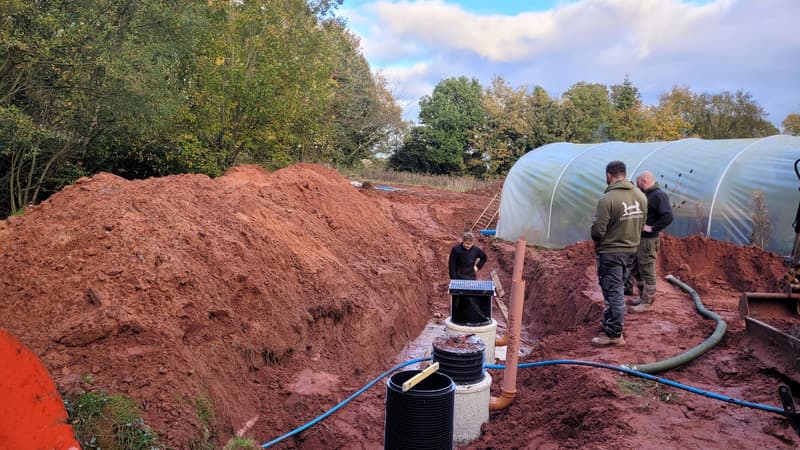
When does a septic tank need replacing?
Many old tanks keep working for decades, but replacement or an upgrade may be needed if:
- the tank is cracked, collapsing or leaking
- the drainage field has failed and can't be repaired
- the system discharges to a watercourse and doesn't meet the rules, for example a septic tank discharging to surface water in England GOV.UK
- you're extending the house and the system is too small for the extra occupants
Options include a new septic tank with a drainage field, a package treatment plant, or a conversion unit that upgrades an existing tank. Manufacturer WTE explains that its add-on conversion units carry EN 12566-6 certification, while 'in-tank' conversions don't and need a permit from the Environment Agency before installation WTE. Published prices vary widely, so see our septic tank costs guide, which only uses figures from installers, manufacturers, merchants and official bodies.
Keeping records
Good records save money and stress. Keep:
- the location of the tank, lids and drainage field (a sketch or photo is enough)
- your registration or exemption reference, if your nation requires one
- every emptying receipt, with the waste carrier's details
- service reports for a treatment plant
- any building regulations or building warrant paperwork for a replacement
These records help when you sell, when a new contractor visits, and when you need to show a regulator that the system is being looked after.
Getting help from local suppliers
Whether you need a routine empty, a survey of a struggling system or quotes for a replacement, use the form on this page. Tell us the service you need and your postcode, and we look for up to 3 local suppliers who cover your area. You can also read more on our septic tanks and treatment plants and drainage pages.
Frequently asked questions
How often should I empty my septic tank?
GOV.UK's general binding rules for England say you should have it desludged at least once a year or in line with the manufacturer's instructions, and always before the sludge goes beyond the tank's capacity GOV.UK.
Can I use bleach with a septic tank?
Sparingly. DAERA warns that excessive use of detergents and bleach kills the bacteria a septic tank needs, and advises choosing septic-safe products DAERA.
Can a septic tank discharge to a stream?
Not in England. Under the general binding rules, a septic tank must not discharge directly to surface water, so you'd need a sewage treatment plant or another solution GOV.UK. Rules differ in Scotland, Wales and Northern Ireland.
Who empties septic tanks in Scotland and Northern Ireland?
Scottish Water offers a household de-sludging service, at £254.40 for a scheduled visit in 2026–27 Scottish Water. NI Water offers one free discretionary empty in any 12-month period if its conditions are met NI Water. Private firms also operate in both nations.
Do I need to tell a buyer about my septic tank?
In England, yes. GOV.UK says that if you sell your property, you must tell the new owner about the sewage treatment system GOV.UK.