If your home isn't on the gas grid, you have to choose and look after your own heating fuel. For most rural homes that means heating oil, LPG, a heat pump, or wood. Each has its own rules, safety checks and grants. This guide compares them, so you know what to ask suppliers and installers.
We look for up to 3 local suppliers who cover your area, whether you need a boiler service, a new oil tank, an LPG engineer or heat pump quotes. Use the form on this page.
How common is off-grid heating?
Very common in rural areas, and the fuel mix changes a lot from place to place:
- Northern Ireland: 480,635 of 768,810 households had oil central heating in 2021, 62.5% NISRA.
- Wales: 7.8% of households used oil only for central heating in 2021, rising to 35.3% in Ceredigion and 27.7% in Powys ONS Census 2021.
- England: 3.2% of households used oil only ONS Census 2021.
- Scotland: about 5% of households use oil, rising to 35% in very remote rural mainland areas, and around 12% of households aren't on the gas grid Rural Exchange.
LPG matters in some areas too. On Anglesey, 8.7% of households used tank or bottled gas only for central heating in 2021, and 6.4% in Gwynedd ONS Census 2021. You can see local figures on our area pages.
Heating oil
Oil boilers are familiar, powerful and work well with existing radiators. The main things to manage are the tank, the boiler service and buying fuel.
Oil tank rules in England
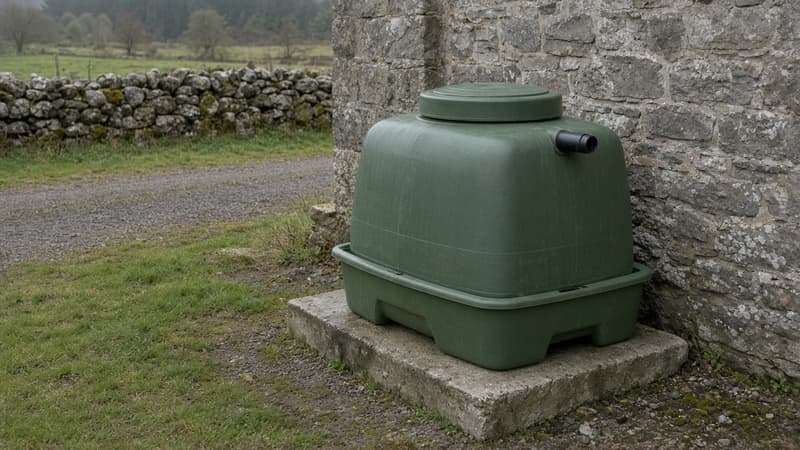
For a home tank holding up to 3,500 litres in England, GOV.UK says the installer should assess the risk of an oil spill. You'll need a bund, a secondary container that can hold 110% of the tank's contents, in situations such as:
- the tank is within 10 metres of inland or coastal waters
- it's within 50 metres of a well, borehole or spring
- spilled oil could reach an open drain
- the tank can hold more than 2,500 litres
The tank must have a sticker in a prominent place explaining how to look after the oil and what to do if there's a spill. Tanks of 3,501 litres or more must follow the rules for businesses, and Wales, Scotland and Northern Ireland have their own building regulations GOV.UK: oil storage. GOV.UK recommends choosing an installer registered with a competent person scheme, so they can self-certify that the work meets building regulations GOV.UK.
Looking after an oil tank
OFTEC, the oil heating trade body, says fuel tanks have an expected working life of around 20 years, with the risk of a costly failure increasing with age. It recommends a tank check by a competent person at your annual boiler service, plus your own visual checks in between, particularly after extreme weather OFTEC. OFTEC also says you're responsible for maintaining the tank, that spills can be very costly to clean up, and that you should check whether your home insurance covers oil leaks OFTEC.
LPG
LPG (liquefied petroleum gas) is stored on site in a bulk tank filled by tanker, or in cylinders. It suits gas cookers and boilers and is often used where a home wants gas appliances without a mains connection.
Use a registered engineer
The Gas Safety (Installation and Use) Regulations 1998 say no employer or self-employed person may work on gas fittings unless they're in a class of persons approved by the Health and Safety Executive legislation.gov.uk. In practice, that means a Gas Safe registered engineer qualified for LPG. HSE publishes guidance on LPG and domestic gas safety HSE: LPG HSE: domestic gas safety.
Questions to ask an LPG supplier
- Who owns the tank, and who is responsible for maintaining it?
- How long is the contract, and what does it cost to leave?
- How is the price per litre set and reviewed?
- Is there automatic top-up, and what is the minimum delivery?
Get the answers in writing before you sign.
Heat pumps
A heat pump takes heat from the air or the ground and uses electricity to raise it to a useful temperature. It's the main option the government funds for homes moving away from oil and LPG.
Grants in England and Wales
The Boiler Upgrade Scheme gives £7,500 towards an air source or ground source heat pump, and £2,500 for an air-to-air heat pump. You can get one grant per property GOV.UK: what you can get. Until March 2027, you may get an extra £1,500 towards an air or ground source heat pump if your home is heated by oil or LPG and has no mains gas connection GOV.UK.
To be eligible, you must own the property (including a second home or one you let) and be replacing fossil fuel heating such as oil, gas, electric or LPG. Your installer must commission and install the heat pump within 120 days of applying, and GOV.UK suggests speaking to an MCS certified installer if you're unsure whether your property is suitable GOV.UK: eligibility.
Grants in Scotland
The Home Energy Scotland Grant and Loan offers up to £7,500 in grant for a heat pump, with up to another £7,500 as an optional interest-free loan. A £1,500 uplift applies to rural and island homes on both the heating and energy efficiency grants, so rural households can claim up to £18,000 in grants. You must own the home and it must be your only or main residence. Only heat pumps that provide all of a home's heating and hot water are eligible, so hybrid, air-to-air and exhaust air heat pumps aren't funded, and you must use an MCS installer Home Energy Scotland.
VAT
Installing a heat pump in a home is zero-rated for VAT from 1 May 2023 to 31 March 2027, reverting to 5% from 1 April 2027 HMRC.
Planning
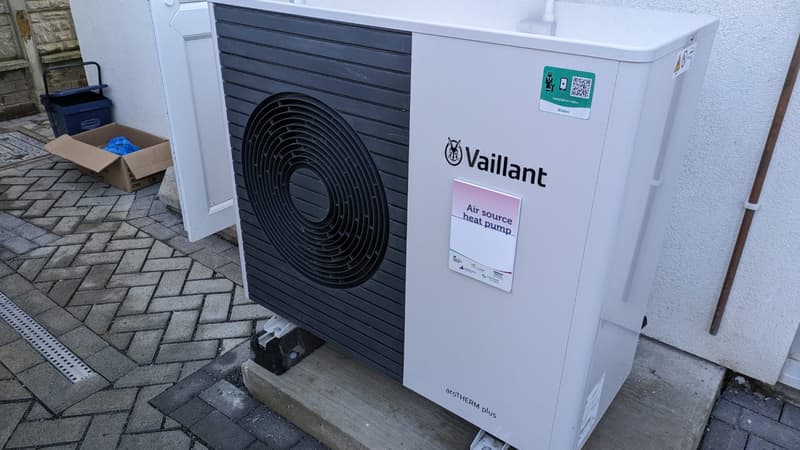
In England, Class G of Part 14 of the General Permitted Development Order allows many air source heat pumps without a planning application, subject to conditions that were amended in 2025 legislation.gov.uk. Listed buildings, conservation areas and the other UK nations have different rules, so check with your installer and council.
Will a heat pump work in an old rural house?
It can, but design matters more than with a boiler. A good installer will carry out a room-by-room heat loss calculation, size the heat pump to suit, and may recommend insulation or larger radiators first. In solid-walled stone houses, take care with insulation: Historic Environment Scotland explains that cement render reduces an old wall's ability to dry out, so the wrong materials can make damp worse Historic Environment Scotland. See our guide to damp in old stone houses.
Wood and biomass
Wood stoves and biomass boilers are popular in rural homes with access to fuel. In England and Wales, the Boiler Upgrade Scheme gives £5,000 towards a biomass boiler GOV.UK, but only if the property is off the gas grid and in a rural area, and the boiler has an emissions certificate GOV.UK. In Scotland, Home Energy Scotland funds wood-fuelled biomass boilers and some eligible stoves, but not non-automated, non-pellet stoves or room heaters, and you must show why a heat pump or high heat retention storage heaters aren't suitable Home Energy Scotland.
In England, wood sold in volumes under 2 cubic metres must be certified as Ready to Burn, meaning a moisture content of 20% or less GOV.UK. Read our chimney and wood burner safety guide.
Carbon monoxide: the same rule for every fuel
Oil, LPG, wood and coal appliances can all produce carbon monoxide if they're faulty, badly installed or poorly ventilated. The NHS advises a CO alarm in every room with an appliance that burns gas, oil, coal or wood NHS. In Scotland, a CO detector is required in any room with a carbon-fuelled appliance such as a boiler, open fire or wood burner Scottish Government. Get every appliance serviced every year.
Comparing your options
| Oil | LPG | Heat pump | Biomass | |
|---|---|---|---|---|
| Fuel storage | Tank on site | Tank or cylinders | None | Store for logs, pellets or chips |
| Who can install | Competent person scheme installer recommended | Gas Safe engineer qualified for LPG | MCS installer for grants | MCS installer for BUS grants |
| Grant to install (England and Wales) | None | None | £7,500 (+£1,500 if replacing oil or LPG, until March 2027) | £5,000, rural off-gas homes only |
| Power cut | Boiler needs electricity | Boiler needs electricity | Needs electricity | Boilers need electricity; a stove doesn't |
Sources: GOV.UK oil storage; Gas Safety Regulations; BUS amounts; BUS eligibility; BUS oil and LPG uplift.
Running costs depend on fuel prices, your home's insulation and how you use the heating, so ask installers for an estimate based on your own house and fuel use.
Getting quotes
For a fair comparison, ask every installer for a written quote that shows the equipment, the work included, the grant they've assumed, the VAT treatment and the expected running costs. Use the form on this page to reach local suppliers, and see our heating oil, LPG and heat pump pages, and our heat pump grants guide.
Frequently asked questions
How long does an oil tank last?
OFTEC says fuel tanks have an expected working life of around 20 years, and recommends a tank check at every annual boiler service OFTEC.
Does my oil tank need a bund?
In England, a bund is needed in situations such as a tank over 2,500 litres, within 10 metres of water, within 50 metres of a well, borehole or spring, or where oil could reach an open drain GOV.UK.
How much is the heat pump grant for oil and LPG homes?
In England and Wales, £7,500 for an air or ground source heat pump, plus an extra £1,500 until March 2027 if your home is heated by oil or LPG with no mains gas connection GOV.UK.
Can I get a heat pump grant in Scotland?
Yes. Home Energy Scotland offers up to £7,500 in grant plus an optional interest-free loan, and a £1,500 rural and island uplift Home Energy Scotland.
Who can work on an LPG boiler?
Only someone in a class of persons approved by HSE under the Gas Safety Regulations, which in practice means a Gas Safe registered engineer qualified for LPG legislation.gov.uk.