A wood burner or open fire is part of life in many rural homes, and often the backup when the power goes off. But a neglected chimney is a fire risk, and any fire that burns fuel can produce carbon monoxide. This guide covers how often to sweep, what to burn, the rules on smoke and fuel, carbon monoxide alarms, and how to look after chimneys you no longer use.
Need a sweep, a stove service or a chimney repair? Use the form on this page and we look for up to 3 local suppliers who cover your area.
Why sweeping matters
Burning wood and coal leaves soot and tar in the flue, and birds' nests and debris can block it. The Scottish Fire and Rescue Service warns that these leftovers can catch fire, and a chimney fire can send burning soot into your living room or start fires in the roof space or on other floors. It says you can help prevent this by having your chimney swept regularly by a certified sweep Scottish Fire and Rescue Service.
Chimney fires are still common. HETAS, a government-authorised competent person scheme for solid fuel and biomass GOV.UK, reports 2,608 chimney fires in England in 2021–22 (April 2021 to March 2022), a 16% fall on the previous year HETAS.
How often should a chimney be swept?
It depends on what you burn. HETAS and the Scottish Fire and Rescue Service give slightly different advice, and the fire service is stricter for wood:
| Fuel | HETAS | Scottish Fire and Rescue Service |
|---|---|---|
| Wood | At least twice a year | Quarterly when in use |
| Smokeless fuel | At least once a year | At least once a year |
| Bituminous coal or peat | – | Twice a year |
| Mixed fuels | – | The highest frequency, which is quarterly |
Sources: HETAS; Scottish Fire and Rescue Service.
When to book
HETAS says the best times to sweep are just before the heating season starts and after the stove hasn't been used for a long period. If you sweep twice a year, the second sweep should come after the peak of the heating season HETAS. The fire service also advises a thorough clean before winter, because dust, debris and blockages can build up over summer when the chimney isn't used Scottish Fire and Rescue Service.
Sweeps get busy in autumn, so book early. If you burn wood heavily through a long winter, a mid-season sweep is worth planning in.
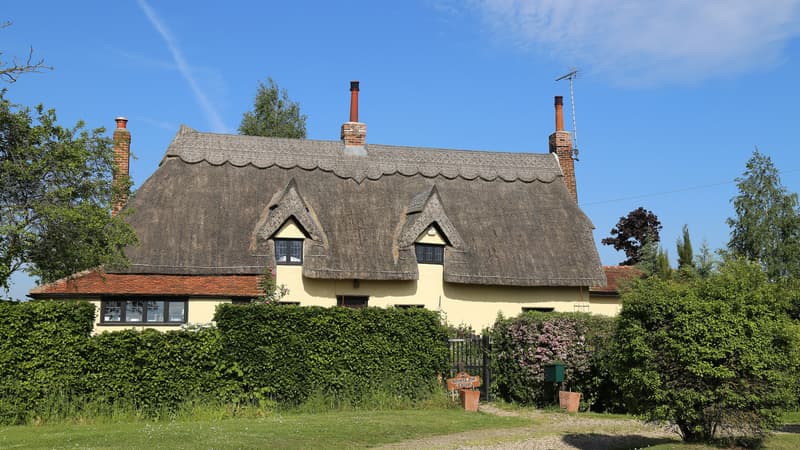
What a chimney sweep does
A visit usually includes:
- sweeping the flue with brushes or a power sweeping system and removing soot and tar
- checking for blockages such as nests, and fitting a bird guard or cowl if needed
- a smoke test to check the flue draws properly
- a sweeping certificate for your records
Keep your certificates with your other house records, so you can show when the chimney was last swept if you sell the house or a new sweep visits. Ask any sweep you book which trade scheme or association they belong to, and what their certificate covers.
Burn the right fuel
Defra says burning at home, particularly with house coal or wet wood, is a major source of PM2.5, tiny particles that can enter the bloodstream and lodge in the lungs and other organs. It says burning dry wood produces more heat and less soot than wet wood, and can reduce emissions by up to 50% GOV.UK (Defra). Less soot also means a cleaner flue between sweeps.
In England, wood sold in volumes under 2 cubic metres must be certified as Ready to Burn, which confirms a moisture content of 20% or less GOV.UK. The restrictions on selling wet wood and house coal began on 1 May 2021 GOV.UK.
If you buy larger loads or season your own logs:
- split logs and stack them off the ground, under cover but open to the wind
- season them before burning, and check with a moisture meter
- never burn treated, painted or waste wood, or household rubbish
Smoke control areas
Some towns and villages are smoke control areas. There you can't release smoke from a chimney unless you burn an authorised fuel or use a Defra-approved (exempt) appliance. In England you can be fined up to £300 if your chimney releases smoke in a smoke control area, and up to £1,000 for buying unauthorised fuel to use in an appliance that isn't approved GOV.UK. Contact your council to check whether your home is in one GOV.UK.
Carbon monoxide: alarms and symptoms
Carbon monoxide (CO) is a poisonous gas with no colour or smell. The NHS says it can be made by fires and appliances that burn gas, wood, oil or coal NHS.
Symptoms
The NHS lists symptoms including headache, dizziness, feeling or being sick, weakness, tiredness and confusion, chest and muscle pain and shortness of breath NHS. If you think someone has been exposed and they're finding it hard to breathe or have other serious symptoms, the NHS says to call 999 or go to A&E; if you think you might have symptoms, call NHS 111 NHS.
Alarms
- Everywhere: the NHS advises a CO alarm for each room with an appliance that burns gas, oil, coal or wood, along with properly installed and maintained appliances and clean chimneys and flues NHS.
- Scotland: if you have a carbon-fuelled appliance such as a boiler, open fire or wood burner, you must have a CO detector in the same room. It doesn't need to be linked to the smoke alarms, and gas cookers and hobs don't need one Scottish Government.
- England: the building regulations guidance on combustion appliances, Approved Document J, was amended with extended provisions for CO alarms that came into effect on 1 October 2022 GOV.UK. A new stove installation should come with a CO alarm.
Test your alarm regularly and replace it when it reaches the end of its life.
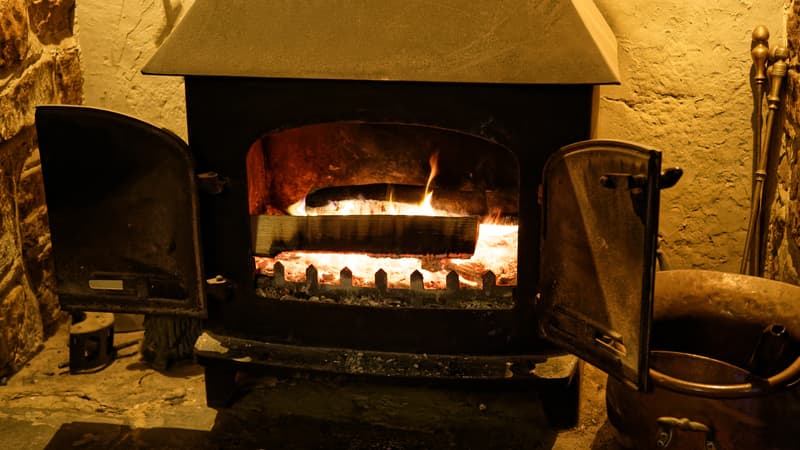
Installing a new stove
Fitting a stove involves the flue, the hearth, ventilation and often a chimney liner, and must meet building regulations. In England the relevant guidance is Approved Document J GOV.UK. Ask any installer:
- whether they can self-certify the work under a competent person scheme, or whether you'll need to apply to building control
- whether the chimney needs lining, and why
- whether the stove is suitable for a smoke control area, if you're in one
- what certificate and paperwork you'll receive
Biomass boilers
A biomass boiler is different from a room stove. In England and Wales, the Boiler Upgrade Scheme gives £5,000 towards one, but only for properties off the gas grid in a rural area, with a boiler that has an emissions certificate GOV.UK GOV.UK. See our off-grid heating guide.
Chimneys you don't use
Many older rural homes have chimneys that are no longer used. Historic Environment Scotland's guidance for owners says redundant flues need some air movement. Soot in a flue attracts moisture, and a closed-off chimney can become damp, with salts leaching into the masonry and plaster and causing staining. It advises that chimney heads shouldn't be capped off, but protected with vented cowls, and that a closed-off hearth needs a vented opening Historic Environment Scotland.
HES also warns that a chimney in poor condition will let water in, and that exposed chimneys need regular checks on their pointing Historic Environment Scotland. If you see damp staining on a chimney breast, it's worth getting a sweep or roofer to look at the stack and flashing. Our guide to damp in old stone houses explains more.
A simple annual routine
- Late summer or early autumn: book the sweep and stove service; check the CO alarm
- Before first use: check the stove's door seals and glass, and that the flue draws
- Through winter: burn dry wood, keep the air controls as the manufacturer advises, and book a mid-season sweep if you burn wood heavily
- Spring: sweep again after the heating season; check the stack, pot and flashing from the ground
Frequently asked questions
How often should I sweep my chimney if I burn wood?
HETAS recommends at least twice a year, and the Scottish Fire and Rescue Service says quarterly when the stove is in use HETAS SFRS.
What is Ready to Burn?
A certification for wood fuel. In England, wood sold in volumes under 2 cubic metres must be Ready to Burn certified, confirming a moisture content of 20% or less GOV.UK.
Do I need a carbon monoxide alarm with a wood burner?
In Scotland it's a legal requirement in the same room Scottish Government. The NHS advises one in every room with an appliance that burns gas, oil, coal or wood NHS.
Can I use a wood burner in a smoke control area?
Only if you burn an authorised fuel or use a Defra-approved (exempt) appliance. In England you can be fined up to £300 if your chimney releases smoke there GOV.UK.
Should I cap a chimney I don't use?
Historic Environment Scotland advises against capping chimney heads off. It recommends vented cowls and a vented opening where a hearth is closed off, to keep air moving and prevent damp Historic Environment Scotland.