Liquefied petroleum gas (LPG) heats and cooks for thousands of homes beyond the reach of the gas mains. It's stored on site, either in a bulk tank filled by a tanker or in cylinders you swap or refill. That gives you independence, but also responsibilities: a supply contract to manage, a tank to look after and gas appliances that only a qualified engineer can work on. This guide explains how LPG supply works, your rights when switching supplier, the safety rules and the grants for moving to low carbon heating.
If you need an LPG boiler serviced or replaced, or quotes for an alternative, use the form on this page. We look for up to 3 local suppliers who cover your area.
What LPG is and who uses it
HSE explains that LPG is mainly propane, butane or a mix of the two, and is used in heating and cooking appliances, vehicles and industry. A powerful odorant is added so that leaks are easy to detect HSE: About LPG. It's supplied in canisters, cylinders and bulk storage tanks HSE.
LPG is a small share of home heating nationally but important in some rural areas. In the 2021 Census, 8.7% of households on Anglesey and 6.4% in Gwynedd used tank or bottled gas as their only central heating ONS Census 2021.
Bulk tank or cylinders?
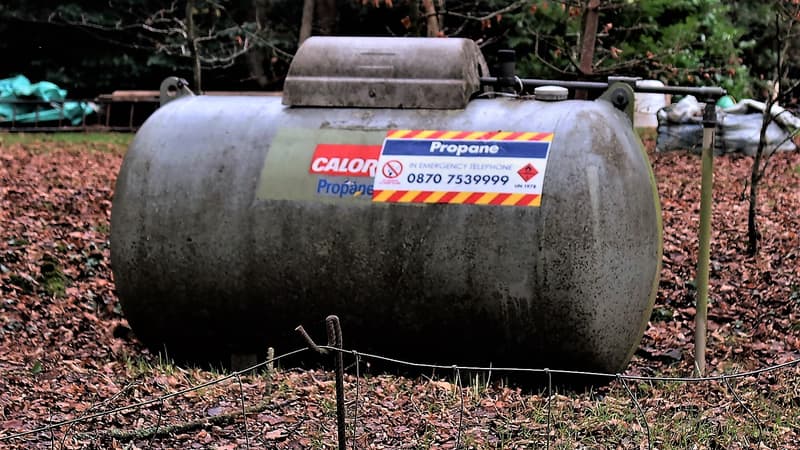
Most homes that heat with LPG use a bulk tank, while cylinders are more common for cooking, small heaters or homes with low demand. GOV.UK notes that LPG is typically supplied through tanks that are already installed, or provided by your chosen supplier, and that the supplier will typically own the tank GOV.UK: switching bulk LPG supplier.
When you're choosing between them, consider:
- How much you use. Central heating and hot water use far more gas than cooking alone, which usually points to a bulk tank.
- Access. A tanker has to reach the tank. Long, narrow or soft tracks can be a problem, especially in winter, so mention access when you get quotes.
- Who owns the tank. This affects your contract, your maintenance responsibilities and switching, as explained below.
Supply contracts: the 2-year rule
LPG suppliers often ask you to sign an exclusive contract, which ties you to one supplier for a set period. Under an order made by the Competition and Markets Authority (CMA), that exclusive period can be no longer than 2 years, and the notice period to end a supply agreement can't be more than 42 days GOV.UK GOV.UK: LPG market orders.
Suppliers must make switching easy. Information on how to switch must be in every new contract and on every invoice GOV.UK. If your exclusive contract runs for more than 2 years, GOV.UK says it may be unlawful.
How to switch LPG supplier
You can switch during or at the end of your exclusive period. GOV.UK recommends contacting both your current supplier and the new one. It says a switch is usually completed within 28 days, unless the tank needs replacing GOV.UK.
- At the end of your exclusive period: your current supplier can't charge you a fee to switch GOV.UK.
- Before the end: you may have to pay a fee for ending the contract early. Your supplier must tell you the fees and the notice period GOV.UK.
Suppliers' charges for taking on new customers vary, so GOV.UK advises comparing them before you choose GOV.UK.
What happens to the tank?
Most customers keep the same tank, and the new supplier takes ownership of it. If the new supplier wants to install its own tank, the old one has to be removed first. Your existing supplier must sell its tank to the new supplier if asked, and you shouldn't be charged for removing an existing tank GOV.UK. If you own the tank yourself, the new supplier can remove it or buy it from you at a price you agree GOV.UK.
If you think a supplier has broken the order, you can report it to the CMA's remedies monitoring team. The CMA doesn't act for individual customers, but it does enforce the order GOV.UK.
Safety: what makes LPG different
HSE warns that LPG is flammable and heavier than air, so a leak can settle and build up in low spots such as drains and basements. There it can be a fire, explosion or suffocation hazard HSE. That's why tank and cylinder positions matter, and why cylinders shouldn't be stored below ground level or next to drains.
HSE and the LPG industry have also strongly advised replacing buried metal LPG pipework with non-corroding materials such as polyethylene. This followed a fatal explosion in 2004 caused by a gas leak from a corroded buried pipe HSE: pipework replacement programme. That programme focused on commercial and industrial premises, but if your home has old buried metal pipework between the tank and the house, ask your supplier or engineer about it.
Only a registered engineer can work on gas
In Great Britain, the Gas Safety (Installation and Use) Regulations 1998 say no employer or self-employed person may carry out work on gas fittings unless they're a member of a class of persons approved by HSE GSIUR regulation 3. In practice that's the Gas Safe Register, and your engineer's registration should cover LPG. The regulations make a narrow exception for jobs like replacing a cylinder hose or the regulator on a portable heater GSIUR reg 3. Northern Ireland has its own version, the Gas Safety (Installation and Use) Regulations (Northern Ireland) 2004, with the same rule that only a member of an approved class of persons may work on gas fittings GSIUR (NI) 2004 reg 3. See also HSE's LPG pages.
Carbon monoxide
Carbon monoxide (CO) is colourless and has no smell. The NHS advises a CO alarm in each room with an appliance that burns gas, oil, coal or wood, and says to get boilers, heaters and cookers serviced regularly by a qualified and registered engineer NHS. If you think a gas appliance is leaking carbon monoxide, the NHS says to call the free National Gas Helpline on 0800 111 999, which is open 24 hours a day NHS.
In Scotland, a CO detector is required in every room with a carbon-fuelled appliance such as a boiler, but gas cookers are excluded Scottish Government.
Servicing and looking after the system
- Annual boiler service by an LPG-qualified Gas Safe engineer, in line with the NHS advice to service gas appliances regularly NHS.
- Keep the tank area clear. Don't let vegetation, stored materials or rubbish build up around the tank. Your supplier will have its own siting and clearance rules.
- Keep the tanker route open, especially before winter. A blocked track can mean a missed delivery.
- Know your supplier's emergency number and keep it with your tank documents.
If you let the property
Landlords have extra legal duties. In Great Britain, under regulation 36 of the Gas Safety (Installation and Use) Regulations 1998, a landlord must make sure each gas appliance and flue covered by the duty is checked for safety within 12 months of installation and then at intervals of no more than 12 months, and must keep a record of each check GSIUR regulation 36. In Northern Ireland, regulation 36 of the 2004 Regulations sets the same twelve-month checks GSIUR (NI) 2004 reg 36. These rules apply to LPG as well as mains gas. If you run a holiday let or rent out a cottage, check with a Gas Safe engineer how they apply to your letting.
Thinking of moving away from LPG?
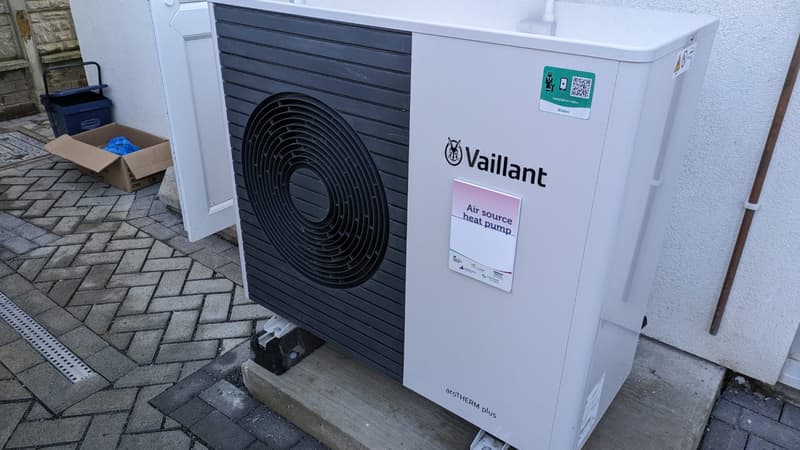
Homes heated by LPG get more help than most to switch to a heat pump:
- England and Wales: the Boiler Upgrade Scheme gives £7,500 towards an air or ground source heat pump, plus an extra £1,500 until March 2027 if your home is heated by oil or LPG and has no mains gas connection GOV.UK.
- Scotland: Home Energy Scotland offers up to £7,500 in grant for a heat pump, with a £1,500 uplift for eligible rural and island homes Home Energy Scotland.
- VAT: installing a heat pump in a home is zero-rated until 31 March 2027 HMRC.
Before you switch, check your LPG contract. If you're still in an exclusive period, ending it early may cost a fee GOV.UK, so time the change for the end of the period if you can. Our heat pump page and guide to heat pump grants for rural homes have more detail.
LPG, oil or a heat pump?
Each has trade-offs. LPG boilers are compact and can be wall-hung, and gas suits cooking. Oil usually means a larger tank and a floor-standing boiler. A heat pump removes fuel deliveries altogether but needs a well-designed system. Our guide to off-grid heating: oil, LPG and heat pumps compares them, and the oil heating page covers tanks and bunding.
Questions to ask LPG suppliers and engineers
- How long is the exclusive period, and what is the notice period? Both have legal limits GOV.UK.
- Who will own the tank, and who is responsible for inspecting and maintaining it?
- What are the delivery arrangements: automatic top-up or order when needed, and what minimum order?
- For engineers: does your Gas Safe registration cover LPG appliances?
- Is any buried pipework metal, and should it be replaced HSE?
Frequently asked questions
How long can an LPG contract tie me in?
An exclusive LPG supply contract can't last longer than 2 years, and the notice period to end it can't be more than 42 days GOV.UK.
Can my supplier charge me for removing its tank when I switch?
No. GOV.UK says you shouldn't be charged for removing existing tanks, and your old supplier must sell its tank to the new supplier if the new supplier wants to buy it GOV.UK.
Who can service an LPG boiler?
A Gas Safe registered engineer qualified for LPG. The law says anyone working on gas fittings for work must be in an approved class of persons: in Great Britain under the 1998 Regulations GSIUR, and in Northern Ireland under the 2004 Regulations GSIUR (NI).
Why is LPG dangerous in a cellar?
LPG is heavier than air, so a leak can settle in low spots such as drains and basements, where it can cause a fire, explosion or suffocation hazard HSE.
Is there a grant to replace LPG heating?
In England and Wales, the Boiler Upgrade Scheme gives £7,500 for an air or ground source heat pump, and an extra £1,500 until March 2027 for homes heated by oil or LPG with no mains gas GOV.UK.