Wood is one of the oldest ways to heat a rural home, and for many households off the gas grid it's still one of the most practical. A log stove in the sitting room, a pellet boiler in an outbuilding feeding the radiators, or a wood chip system running a farmhouse and its holiday cottage are all common sights in the countryside. But the rules around burning wood have changed a lot in recent years: what fuel you can buy, which stoves can be sold, which grants exist and how the old Renewable Heat Incentive payments work. This guide brings the official rules together in one place.
If you'd like quotes for a biomass boiler or wood burner, see our biomass and wood burners page or use the form on this page. We look for up to 3 local suppliers who cover your area.
Biomass boiler or wood burner: what's the difference?
The two are often lumped together, but they do quite different jobs:
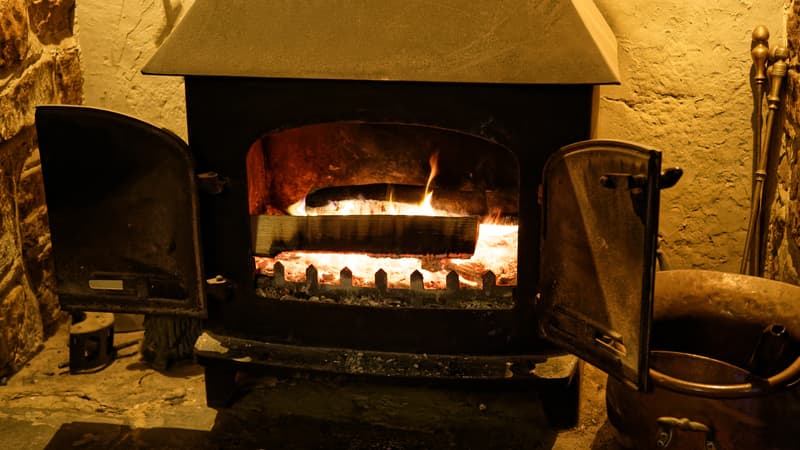
- Wood-burning stoves are room heaters. They heat the room they're in, and some models have a back boiler for hot water. Most are loaded by hand with logs.
- Biomass boilers replace an oil, LPG or electric boiler and run your central heating and hot water. They usually burn wood pellets or wood chips fed automatically from a hopper or store, though log boilers also exist.
The difference matters for money. HMRC defines wood-fuelled boilers as boilers designed to be fuelled solely by wood (including chips and pellets), straw or similar plant matter. Installing one can qualify for VAT relief, but multi-fuel or dual-fuel boilers that can also burn coal or oil are standard-rated, and so are stand-alone wood-burning stoves HMRC. Grants work the same way: they're aimed at boilers that heat the whole home, not at stoves.
Grants for biomass boilers
England and Wales: the Boiler Upgrade Scheme
The Boiler Upgrade Scheme (BUS) currently offers £5,000 towards a biomass boiler, and you can get one grant per property GOV.UK. Biomass is only eligible if all of these are true:
- the property is off the gas grid
- the property is in a rural location (Ofgem's guidance for property owners explains how this is checked)
- the boiler has an emissions certificate showing that polluting emissions are kept to a minimum
You can't get a BUS grant for a biomass boiler in a self-build property, and most new builds, social housing and properties that have already had government funding for a heat pump or biomass boiler are excluded GOV.UK. Your installer normally applies for the grant on your behalf. If you're comparing options, our heat pump grants guide covers the larger heat pump grants too.
Scotland: Home Energy Scotland
In Scotland, Home Energy Scotland funds wood-fuelled biomass boilers and some eligible stoves, but not non-automated, non-pellet stoves or room heaters. You must also show why a heat pump or high heat retention storage heaters aren't suitable Home Energy Scotland. Get advice from Home Energy Scotland before you commit to a system.
Wales and Northern Ireland
The Boiler Upgrade Scheme covers England and Wales. Northern Ireland isn't covered, and support there changes over time, so check the current position with NI Direct or your local council before you buy.
VAT
Installing a qualifying wood-fuelled boiler, including an integral hopper, is zero-rated in Great Britain and charged at the reduced rate in Northern Ireland. The zero rate covers installations between 1 May 2023 and 31 March 2027, after which these installations go back to the reduced 5% rate HMRC. Building a log or fuel store is standard-rated HMRC.
The Renewable Heat Incentive: what happens now?
Many rural homes installed biomass boilers under the Domestic Renewable Heat Incentive (RHI). The scheme in Great Britain closed to new applicants at midnight on 31 March 2022. Members who joined and followed the rules receive quarterly payments over seven years for the renewable heat their system is estimated to produce Ofgem.
Since the scheme has closed, the only new applications allowed are after a change of ownership Ofgem. If you're buying a house with an RHI-funded biomass boiler, ask the seller:
- when the system joined the scheme and how many years of payments are left
- for servicing records and the fuel records the scheme needs
- whether the change of ownership has been reported to Ofgem
Ofgem's change-of-ownership guidance sets out what the new owner has to do. Don't assume payments carry on automatically.
In England, dry wood is the law
Wet wood burns badly. It gives out less heat, makes more smoke and soot, and tars up flues. Defra says burning dry wood produces more heat and less soot than wet wood and can cut emissions by up to 50% Defra.
Since 1 May 2021, sales of wet wood in units under 2 cubic metres have been unlawful in England, and wet wood sold in larger volumes must come with advice on how to dry it before burning Defra Air Quality (Domestic Solid Fuels Standards) (England) Regulations 2020. In England, wood fuel sold in volumes under 2 cubic metres must be certified "Ready to Burn", which confirms a moisture content of 20% or less. This applies to firewood and briquettes in retail bags and to loose bulk deliveries under 2 cubic metres Defra.
Practical points for rural households:
- Buy small quantities with the Ready to Burn logo if you're in England.
- Season larger loads. If you buy a trailer-load of green logs, split them, stack them off the ground under cover with the sides open to the wind, and follow the drying advice that came with them.
- Use a moisture meter. They're cheap and take the guesswork out of whether a log is at 20% or below.
- Pellets and chips have their own quality standards. Ask your boiler maker which grade it was designed for, and store pellets somewhere dry.
Smoke control areas
Many parts of the UK are smoke control areas. In these areas you can't release smoke from a chimney, and you can only burn authorised fuel unless you use a Defra-approved ("exempt") appliance. In England you may have to pay a penalty of up to £300 if your chimney releases smoke in a smoke control area, and you can be fined up to £1,000 for buying unauthorised fuel to use in an appliance that isn't Defra-approved GOV.UK.
Smoke control areas are mostly in towns, but some villages and market towns are covered. Your local council's environmental services department can tell you whether you live in one GOV.UK.
Ecodesign: what it means for new stoves
"Ecodesign" is the efficiency and emissions standard for solid fuel room heaters such as wood stoves. Under Commission Regulation (EU) 2015/1185, as it applies in UK law, solid fuel local space heaters must meet the ecodesign requirements set out in its Annex II from 1 January 2022 legislation.gov.uk. In practice, new stoves on sale today are built to that standard. Ecodesign doesn't mean you have to rip out an older stove that's working safely, but it's a good reason to choose a modern model if you're replacing one.
Installation and building regulations
In England, installing or replacing a combustion appliance such as a solid fuel stove or boiler is notifiable building work. Either your installer must be registered with a Competent Person Scheme, or you need to notify a Building Control Body. Schemes covering solid fuel burners include HETAS, OFTEC, NAPIT and others GOV.UK. HETAS is a government-authorised competent person scheme for solid fuel and biomass GOV.UK. Without a certificate, the local authority won't have a record that the work complies, and you may be asked for compliance certificates when you sell GOV.UK.
The technical guidance on flues, hearths and ventilation in England is Approved Document J, which was amended with extended carbon monoxide alarm provisions from 1 October 2022 GOV.UK. In Scotland, if you have a carbon-fuelled appliance such as a wood burner, you must have a CO detector in the same room Scottish Government. Building rules in Wales and Northern Ireland are similar in purpose but separate, so ask your installer which rules they're working to.
A biomass boiler also needs room: a plant room or outbuilding, a dry fuel store, and access for pellet or chip deliveries. On a rural property, think about whether a delivery lorry can actually reach the store, particularly on a narrow lane or soft track.
Running and maintaining wood heating
- Sweep the flue. HETAS encourages sweeping at least twice a year when burning wood HETAS. Our chimney sweeping and wood burner safety guide covers this in detail, and you can find a sweep through our chimney sweeping page.
- Service the boiler. Automated biomass boilers have augers, fans, igniters and ash systems that need regular servicing. Follow the manufacturer's schedule, which may also be a condition of your warranty.
- Empty the ash. Pellet and chip boilers produce ash that has to be emptied. Check how often your model needs it.
- Fit and test CO alarms. Carbon monoxide can be produced by appliances that burn wood, and the NHS advises a CO alarm in each room with an appliance that burns gas, oil, coal or wood NHS.
- Keep spare fuel. Rural deliveries can be delayed in bad weather, so keep a margin in the pellet store before winter.
Is wood heating right for your home?
Wood heating tends to suit rural homes that:
- have space for fuel storage and, for a boiler, a plant room
- have good access for deliveries, or a reliable supply of their own seasoned timber
- are outside smoke control areas, or are happy to use exempt appliances and authorised fuels
- have someone at home willing to load fuel, empty ash and arrange sweeps
If those don't fit, a heat pump may suit you better, especially with the larger BUS grant (see our off-grid heating guide). Many rural homes combine the two: a heat pump or oil boiler for background heat and a wood stove for the coldest evenings and power cuts.
Frequently asked questions
Can I get a grant for a wood-burning stove?
Not under the Boiler Upgrade Scheme, which funds biomass boilers rather than stoves GOV.UK. In Scotland, Home Energy Scotland funds some eligible stoves, but not non-automated, non-pellet stoves or room heaters Home Energy Scotland.
Is the Renewable Heat Incentive still open?
No. The Domestic RHI closed to new applicants on 31 March 2022. Existing members keep receiving payments for the rest of their seven-year term, and new applications are only possible after a change of ownership Ofgem.
What moisture content should firewood have?
Ready to Burn certified wood has a moisture content of 20% or less Defra. Aim for the same if you season your own.
Do I have to replace my old stove because of Ecodesign?
The Ecodesign regulation sets requirements for solid fuel room heaters from 1 January 2022 legislation.gov.uk. It's aimed at products being sold, and it doesn't, on its own, require you to remove an existing stove. Have an older stove checked by a professional registered with HETAS or another competent person scheme if you're unsure about its condition.
Is VAT charged on a biomass boiler installation?
Qualifying wood-fuelled boilers are zero-rated in Great Britain until 31 March 2027 (reduced rate in Northern Ireland). Multi-fuel boilers and stand-alone stoves are standard-rated HMRC.