Feed stores, log piles, outbuildings, livestock and open countryside all make rural homes attractive to pests. Rats and mice move into barns and lofts as the weather turns, moles wreck lawns and paddocks, rabbits strip gardens and crops, and wasps nest in eaves and sheds. This guide covers your legal duties, which control methods are allowed and which are banned, and the health risks. It uses GOV.UK, legislation, NHS and industry stewardship sources. Much of the wildlife guidance applies to England only, and we flag where that's the case.
If you'd like a professional to help, see our pest control page or use the form on this page. We look for up to 3 local suppliers who cover your area.
Your legal duties
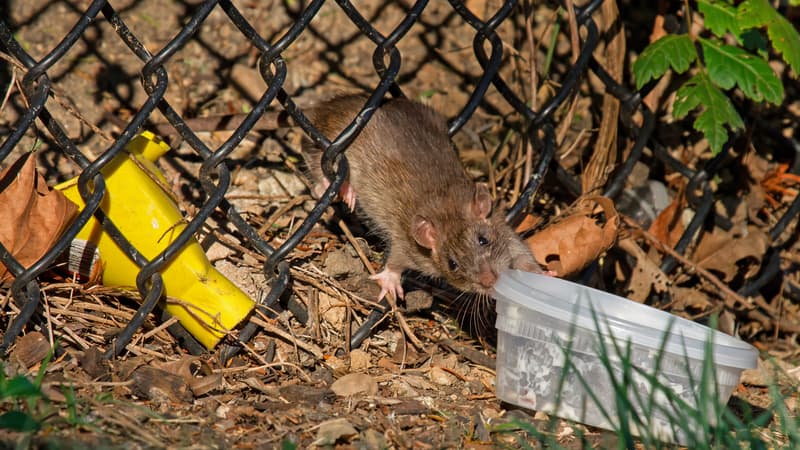
Rats and mice
Under the Prevention of Damage by Pests Act 1949, which covers England, Wales and Scotland, an occupier must tell the local authority in writing if they find that rats or mice are living on or visiting their land in substantial numbers. This duty doesn't apply to agricultural land Prevention of Damage by Pests Act, s3. The council can serve a notice on the owner or occupier requiring reasonable steps to destroy rats or mice or keep the land free of them. The notice can specify treatments and structural repairs or other works Prevention of Damage by Pests Act, s4.
Rabbits (England)
In England, you must control rabbits on your land, excluding the City of London and the Isles of Scilly. If that isn't possible, you must stop them damaging neighbouring crops by putting up rabbit-proof fencing. You can be prosecuted if you don't act GOV.UK. If a neighbour's rabbits are damaging your land, contact them first. If they still don't control them, you can complain to Natural England GOV.UK.
Animal welfare applies to pests too
GOV.UK warns that you can be fined or imprisoned for causing unnecessary harm to any animal GOV.UK. Foxes, moles and mink you catch are protected under the Animal Welfare Act 2006. Causing them unnecessary suffering can mean jail and an unlimited fine GOV.UK.
Banned control methods
GOV.UK's guidance for England says you can't use any of the following on any wildlife GOV.UK:
- self-locking snares
- bows and crossbows
- glue traps designed to catch rodents (see below for the rules in each nation)
- explosives, other than legal ammunition for a licensed firearm
- live birds or animals as decoys, unless you have a licence
Glue traps across the UK. In England, it's an offence to set a glue trap to catch a rodent unless it's set under a glue trap licence Glue Traps (Offences) Act 2022, s1. Wales banned the use of glue traps outright from 17 October 2023 Welsh Government. In Scotland, it has been an offence since 1 July 2026 to use a glue trap to kill or take any animal other than an invertebrate, unless you're an authorised person Wildlife Management and Muirburn (Scotland) Act 2024, s1. We couldn't find an equivalent glue trap ban in Northern Ireland, so check with DAERA before using one there.
You must only kill permitted animals, by permitted methods. Poison must only be used for the pest named on the packaging, and traps must be approved for the species you're targeting and used as instructed GOV.UK. Some animals, such as grey squirrels, must not be kept or released. If you catch one alive, you must kill it humanely GOV.UK.
Rats and mice: doing it responsibly
Rodenticides can poison birds of prey, pets and other wildlife. The Campaign for Responsible Rodenticide Use (CRRU) Code, the industry's stewardship code, sets out how to use them responsibly CRRU:
- Plan first. Survey the site, and note proofing and tidying work for after treatment, such as removing rubbish and weeds that give cover. Don't clear the site before treatment, as that disturbs the rats and makes baiting harder. Remove obvious food such as spilled grain.
- Don't bait for longer than you need to. Most anticoagulant baits should achieve control within 35 days. If they don't, find out why.
- Record every bait point and how much bait was laid.
- Protect the bait from other animals, birds and people with suitable bait stations.
- Collect the bodies. Rats may die 100 metres or more from the bait, and their bodies can poison predators and scavengers.
- Inspect regularly, and never leave bait down at the end of the treatment.
For a serious or recurring rat problem in barns, feed stores or the house, a professional pest controller is usually the safer option. GOV.UK suggests getting professional advice if you don't know which animals you're allowed to control or how to use traps and poisons correctly. Your council may also offer pest control, possibly for a fee GOV.UK.
Health risk: leptospirosis
The NHS says leptospirosis (Weil's disease) is rare in the UK. It spreads in the urine of infected animals, most commonly rats, mice, cows, pigs and dogs, and you can catch it if contaminated soil or fresh water gets into your mouth, eyes or a cut NHS. Most people have no symptoms or mild flu-like symptoms, but some become seriously ill. See a GP if you might have been exposed and develop symptoms such as a high temperature, headache or body aches NHS. Wear gloves when clearing up after rodents, and cover any cuts.
Moles (England)
GOV.UK says mole control is most effective from October to April, when moles are digging new tunnels and before the breeding season GOV.UK. You should:
- set traps at least 150 mm below ground in the main tunnel of a run, and check them at least once a day
- only use spring traps commonly used for moles, and humanely kill any live moles you catch
- use someone trained in gassing products if gas is used
There are no commercially available repellents approved for use against moles GOV.UK, so be wary of products claiming otherwise.
Rabbits: control options (England)
Legal methods include traps and snares, gas, fencing, ferreting and shooting GOV.UK. Snares must be free-running, in good working order and checked once a day. They must not be used near a badger sett or fox earth, or in severe weather. Gassing should be done by someone trained. There are three fencing types: electric netting, electric strained wire and permanent wire-mesh netting GOV.UK. Fencing on scheduled monuments needs agreement from the Defra Secretary of State. Fit badger gates where a fence crosses badger runs GOV.UK. If you're putting up new rabbit fencing, our fencing and gates page can help.
As the occupier, you can shoot rabbits on your land during the day, and authorise one other person in writing: a member of your household or someone employed specifically to control rabbits GOV.UK.
Foxes and mink: protecting poultry (England)
Foxes aren't protected for conservation purposes in England. The owner or occupier can decide when to control them, but must protect their welfare. GOV.UK advises securing food waste in bins and using fencing to protect pets and livestock first GOV.UK. You must not use gassing or poisoning on foxes, block or destroy occupied earths, or use dogs to hunt them. Cage traps and free-running snares must be checked at least once a day, and spring traps must not be used to kill foxes GOV.UK.
Mink, which raid poultry runs and ponds, can be trapped most effectively in February and March and from August to November, using cage traps or approved spring traps checked at least daily. All mink caught must be killed humanely GOV.UK.
Wasps and stings
Wasp nests in eaves, sheds and wall cavities are common in late summer. If a nest is near a door, path or play area, a pest controller can treat it. Don't block entrances or try to remove an active nest yourself.
The NHS advises scraping a bee, wasp or hornet stinger out sideways with a fingernail or the edge of a bank card rather than tweezers, which can squeeze more venom in, then washing the area with soap and water NHS. Call 999 if lips, mouth, throat or tongue suddenly swell, if someone is struggling to breathe or swallow, or if someone faints and can't be woken. These are signs of a serious allergic reaction NHS.
Bats and other protected wildlife
It may be an offence to disturb, damage or destroy places that animals use for shelter or breeding. It's an offence to disturb bats or their roosts, even inside your home GOV.UK. This is GOV.UK guidance for England. If you think bats are in your loft or barn, don't treat it as a pest problem. See Natural England's guidance Natural England, or the equivalent body in Scotland, Wales or Northern Ireland.
You need a wildlife licence to catch or kill some species in ways that would otherwise be illegal GOV.UK.
Prevention is cheaper than cure
- Store feed, grain and bird food in rodent-proof bins.
- Keep log piles and rubbish away from house walls.
- Seal gaps around pipes, vents and doors. Our old buildings page covers repair work on stone walls.
- Check lofts and outbuildings each autumn for droppings and gnawing.
Frequently asked questions
Do I have to report rats to the council?
If rats or mice are living on or visiting non-agricultural land in substantial numbers, the occupier must notify the council in writing Pests Act 1949, s3.
Are glue traps legal for mice and rats?
In England, setting a glue trap to catch a rodent is an offence unless it's done under a licence Glue Traps (Offences) Act 2022. Wales has banned their use Welsh Government, and Scotland bans their use except by authorised persons Wildlife Management and Muirburn (Scotland) Act 2024. We couldn't find an equivalent ban in Northern Ireland.
When is the best time to catch moles?
From October to April, according to GOV.UK guidance for England GOV.UK.
Do I have to control rabbits on my land?
In England, yes. If control isn't possible, you must fence to protect neighbouring crops GOV.UK.
Can I catch leptospirosis from rats?
It's rare in the UK, but it spreads in the urine of infected animals, including rats and mice NHS.