Rural land is often where invasive plants take hold: along streams and ditches, on road verges, in old spoil heaps and on field margins. Japanese knotweed gets the headlines, but giant hogweed, Himalayan balsam and, for horse and livestock owners, ragwort can all cause problems. This guide explains your legal duties, how treatment works and the strict rules on getting rid of the waste, from Environment Agency, Defra and legislation sources. It focuses mainly on England.
If you need help with invasive plants or general grounds maintenance, use the form on this page. We look for up to 3 local suppliers who cover your area.
Which plants are we talking about?
GOV.UK lists the most common invasive non-native plants as Japanese knotweed, giant hogweed, Himalayan balsam, Rhododendron ponticum and New Zealand pygmyweed GOV.UK. Japanese knotweed is the most common of 4 invasive knotweed species in the UK. The others are dwarf, giant and Bohemian (hybrid) knotweed GOV.UK.
Knotweed grows in most UK soils, especially roadsides, waste ground, railway embankments and spoil tips, and it's common along rivers and streams GOV.UK. It spreads through its rhizomes (roots), and a new plant can grow from a piece of rhizome as small as 1 cm GOV.UK. That's why moving soil, strimming or flailing can spread it so easily.
What the law says
Having knotweed isn't an offence, but letting it spread can be
GOV.UK says you don't legally have to remove Japanese knotweed from your land unless it's causing a nuisance, but you must stop it spreading off your property, and you can be prosecuted for causing it to spread into the wild GOV.UK. More broadly, you must not plant invasive non-native plants in the wild or cause them to grow there, which can include moving contaminated soil or plant cuttings. If they're on your land, you must stop them spreading and causing a nuisance or damage to other land. If you don't, you could be responsible for any damage and may be prosecuted GOV.UK.
In England and Wales, the underlying offence is in section 14 of the Wildlife and Countryside Act 1981 (Scotland has its own version of section 14): anyone who plants or otherwise causes to grow in the wild a plant listed in Part II of Schedule 9 commits an offence. It's a defence to show you took all reasonable steps and exercised all due diligence Wildlife and Countryside Act, s14.
Neighbours and community protection notices
The National Wildlife Crime Unit notes there may be civil liability if knotweed is allowed to encroach onto others' land. In some cases, the council or police could issue a Community Protection Notice under the Anti-social Behaviour, Crime and Policing Act 2014 National Wildlife Crime Unit.
Treating knotweed
The government advises not treating knotweed yourself unless you have the right skills and experience, and says there are companies that specialise in it GOV.UK.
Herbicide
Spraying or injecting stems with approved herbicides can be effective, but you'll have to respray. It usually takes at least 3 years to treat Japanese knotweed, and rhizome can lie dormant in the soil for many years and regrow if disturbed or moved GOV.UK. When using chemicals, you may need to GOV.UK:
- make sure anyone spraying holds a certificate of competence for herbicide use, or works under direct supervision of someone who does
- carry out a COSHH (Control of Substances Hazardous to Health) assessment
- get permission from Natural England in protected areas such as SSSIs
- get the Environment Agency's agreement if the plants are near water, which is common on rural land
Choosing a specialist
GOV.UK suggests looking for contractors with accreditations such as Amenity Forum membership or BASIS registers. It notes that many belong to trade bodies such as the Invasive Non-Native Specialists Association or the Property Care Association GOV.UK. Ask for a written treatment plan, how long it will take, and what records and guarantees you'll get. These matter if you sell the property.
Disposing of knotweed: strict rules
Soil or plant material contaminated with Japanese knotweed may be classified as controlled waste GOV.UK. You can't just put it in a skip or green bin.
- Burying on site: you must notify the Environment Agency at least one month beforehand. Material must be buried on the site it came from, at least 5 metres deep, or 2 metres if sealed with a geotextile membrane meeting specific standards GOV.UK.
- Composting: dead brown canes can be composted on site if they're cut, not pulled, at least 10 cm above the crown GOV.UK.
- Burning: an individual only needs to check with the council that burning is allowed. Businesses, including farmers, must tell the Environment Agency at least a week beforehand, tell the council's environmental health officer and get a D7 exemption. Crowns and rhizomes may survive burning, so the remains must still be buried or disposed of properly GOV.UK.
- Off site: it must go to a landfill or incineration facility with the right permit, using a registered waste carrier, and you must tell the Environment Agency where it went GOV.UK.
Giant hogweed: a health hazard
Giant hogweed grows 3 to 5 metres tall and looks like hogweed and cow parsley. It's usually found in damp soils such as river banks, woodland and grassland nidirect. NatureScot warns that its sap contains a toxic chemical that sensitises skin to sunlight and causes severe blisters, with burns that can be serious and long-lasting NatureScot.
If you touch it, nidirect advises covering the affected skin immediately to keep it out of the sun and washing it with cold water. Get medical advice if there's blistering or the sap got in your eyes nidirect. Don't strim or cut it without full protective clothing. It's a job for a specialist.
Himalayan balsam
Himalayan balsam is one of the most common invasive plants GOV.UK and spreads along streams and ditches. Approved ways to treat invasive plants include pulling or digging out plants and cutting them back to stop seeds dispersing, as well as spraying GOV.UK. Whatever method you use, it must not endanger human health or the environment. After treatment, GOV.UK advises re-establishing native plants to reduce soil erosion and compete with any regrowth GOV.UK.
Because balsam and knotweed both favour watercourses, a patch upstream can keep reseeding your land. It's worth talking to neighbours so treatment is co-ordinated along the whole bank, and remember that spraying near water needs Environment Agency agreement in England GOV.UK.
Ragwort and other injurious weeds
For more on grazing land, see our paddock care guide. Ragwort isn't non-native, but it matters to anyone keeping horses or livestock. In Great Britain, the Weeds Act 1959 lets the government serve notice on an occupier to stop certain "injurious weeds" spreading: spear thistle, creeping thistle, curled dock, broad-leaved dock and ragwort Weeds Act 1959. Defra's code of practice on ragwort explains how to assess and control the risk. Not following it may be used as evidence in legal action, while showing you've followed it can help you avoid fines Defra.
Defra's horse welfare code for England says all parts of ragwort are toxic to horses and humans, even when cut, pulled or wilted. It says ragwort should be removed from grazing land and carefully disposed of, wearing gloves. Flowering ragwort can still seed after it's been pulled up, with a 70% germination rate, so the code says it should be disposed of by incineration, controlled burning or landfill Defra horse welfare code. Don't leave pulled plants lying in the field, where wilted ragwort can still be eaten.
Scotland, Wales and Northern Ireland
The GOV.UK knotweed guidance applies to England, and links to separate guidance for Scotland, Wales and Northern Ireland GOV.UK. The principles are similar: don't let invasive plants spread into the wild, and handle the waste carefully. But the regulators, notification rules and waste exemptions differ, so check with SEPA, Natural Resources Wales or the NI authorities before burying, burning or moving material. Giant hogweed is widespread across central and eastern Scotland NatureScot, so Scottish landowners near rivers should know how to recognise it.
Buying or selling rural property
If you're buying, look along boundaries, ditches, banks and any old dumping areas, especially in late spring and summer when growth is obvious. If you're selling and have had knotweed treated, keep the treatment plan, the contractor's records and any guarantee, and be honest about it when asked. Your solicitor or surveyor can advise on what to disclose and how it might affect a sale.
Practical tips for rural owners
- Don't flail or strim knotweed or hogweed. Fragments spread knotweed, and sap from hogweed is dangerous.
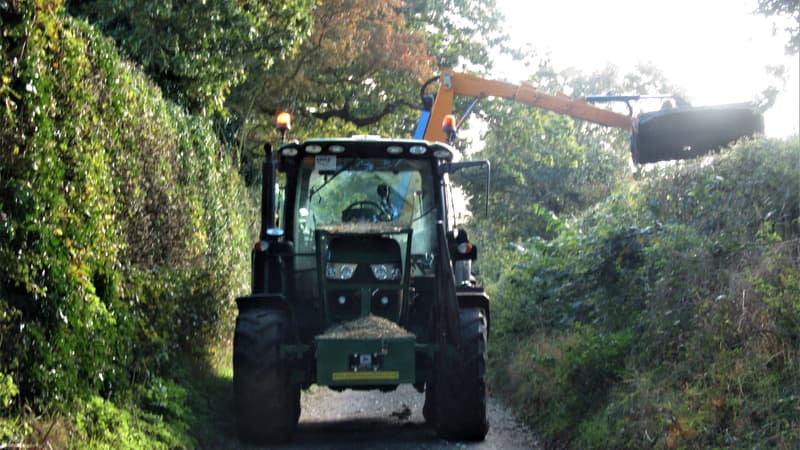
- Brief contractors doing hedge, ditch or verge work about any infestations, so they don't spread them.
- Be careful with soil. Don't bring in topsoil of unknown origin, and don't move soil from infested areas.
- Keep records of treatment, disposal notifications and contractor guarantees.
Frequently asked questions
Is it illegal to have Japanese knotweed on my land?
No, but you must stop it spreading off your property, and you can be prosecuted for causing it to spread into the wild GOV.UK.
How long does knotweed treatment take?
Herbicide treatment usually takes at least 3 years, and dormant rhizome can regrow if disturbed GOV.UK.
Can I burn Japanese knotweed?
As an individual, check with your council that burning is allowed. Businesses need to notify the Environment Agency and get a D7 exemption. Crowns and rhizomes can survive burning GOV.UK.
What should I do if I touch giant hogweed?
Cover the skin straight away to keep it out of sunlight and wash it with cold water. Get medical advice if it blisters or the sap gets in your eyes nidirect.
Do I have to remove ragwort?
In Great Britain, the government can require occupiers to stop ragwort spreading under the Weeds Act 1959 Weeds Act. Defra's code of practice explains how to manage the risk, especially near horses and livestock Defra.