In a town, a power cut means sitting in the dark for a while. In a rural home it can mean no water, because the borehole or spring pump stops, no heating, because oil boilers and heat pumps need electricity, and a freezer full of food at risk. Homes at the end of long overhead lines can also be among the last to be reconnected after a storm. This guide covers your rights in a power cut, the backup options, the legal and safety rules for connecting a generator, and fuel storage limits, all from official sources.
If you'd like quotes for a standby generator or battery system, use the form on this page. We look for up to 3 local suppliers who cover your area.
First, know your rights in a power cut
- Call 105. It's free and puts you through to your local electricity network operator. You can also report a power cut on the operator's website Ofgem.
- Compensation in Great Britain. Ofgem says homes can get £100 if fewer than 5,000 properties are affected and the power is off for more than 12 hours, or if more than 5,000 are affected for more than 24 hours. You get £45 for each additional 12 hours Ofgem.
- Severe weather (GB). In storms the restoration targets are longer: 24 hours in "category 1" and 48 hours in "category 2" severe weather, depending on how many homes are affected Ofgem.
- Northern Ireland. The Ofgem payments don't apply. NIE Networks says it will restore power within 24 hours. If it doesn't, homes are due £50, then £25 for every further 12 hours, and you must claim within 1 month. In severe weather and other events outside its control, the standards may not apply and no payment would be due NIE Networks.
- Priority Services Register. If someone in your home needs extra support, register with your supplier and network operator. Help can include priority support in an emergency where possible and advance notice of planned power cuts Ofgem.
Compensation helps, but it won't keep a water pump or freezer running. That's why many rural households add a backup supply. Our page on power cut compensation has the full table.
What do you need to keep running?
Before you get quotes, list what matters during a long outage. For most rural homes, that's:
- the water pump for a borehole, well or spring, and any UV treatment unit. Our private water supply page covers these
- heating controls and pumps. An oil boiler needs power for its burner and pump, and a heat pump needs a lot more
- the fridge and freezer, some lighting and phone or broadband equipment
- a sewage treatment plant pump or blower, if you have one
An installer will size the system from this list. Heat pumps, electric showers and cookers draw a lot of power, so it's usually much cheaper to back up the essentials than the whole house. Ask installers to show how they've sized the system.
The main options
Portable generators
A petrol or diesel portable generator can power a few appliances through extension leads, run outdoors. They're the cheapest option, but they mean refuelling, noise, and running leads through windows or doors. They must never run indoors or in a garage (see carbon monoxide below).
Standby generators with a changeover switch
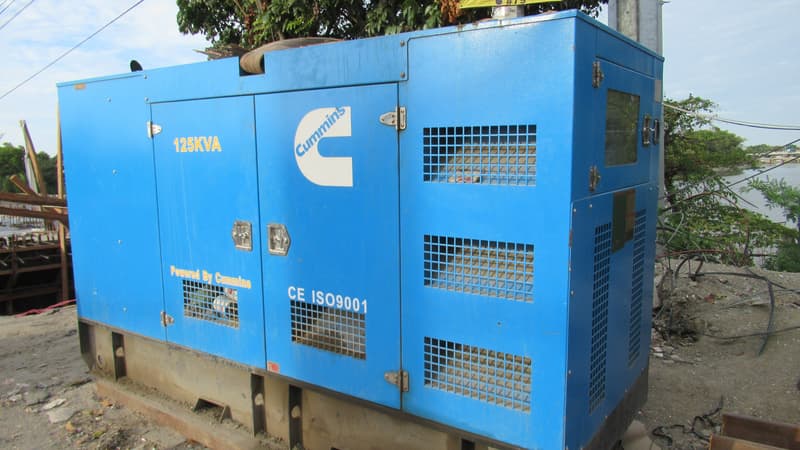
A fixed generator is wired into your home's electrics through a changeover switch, either manual or automatic. When the mains fails, the switch disconnects your home from the grid and connects the generator. An automatic system can start the generator itself, which suits homes that are often empty or have vulnerable occupants.
Battery backup
A battery system, often paired with solar panels, stores electricity and can supply your home during an outage if it's designed to. Not every solar battery provides backup, so ask about it specifically. Since 1 February 2024, batteries installed in homes, including standalone batteries that store grid electricity, have been zero-rated for VAT until 31 March 2027 HMRC. Our guide to solar panels and batteries covers costs.
Fully off-grid systems
Some remote homes have no grid connection at all and combine solar, wind or hydro with a battery bank and a backup generator. These need careful design by specialists, and some technologies need planning permission or environmental consents.
The law on connecting a generator
A generator connected to house wiring without proper isolation can feed electricity back into the network. That can endanger engineers working on lines they believe are dead. In Great Britain, the Electricity Safety, Quality and Continuity Regulations 2002 say that anyone operating a source of energy as a switched alternative to the network must make sure it cannot operate in parallel with that network. If it's part of a low voltage consumer installation, the installation must comply with British Standard requirements ESQCR regulation 21. Northern Ireland has its own Electricity Safety, Quality and Continuity Regulations (Northern Ireland) 2012 ESQCR (NI) 2012.
In practice, that means a properly installed changeover switch. Never plug a generator into a socket with a "suicide lead".
Building Regulations (Part P)
In England, installing a new electrical circuit or replacing a consumer unit is notifiable building work Approved Document P. If your electrician is registered with a competent person scheme, they can self-certify the work. They, or their scheme, must give you a Building Regulations compliance certificate and notify building control within 30 days of completion Approved Document P. If you use an installer who isn't registered, you'll have to apply to a building control body and pay a fee for an inspection GOV.UK. In Wales, the Welsh Government also advises using an installer registered with a competent person scheme or seeking building control approval for most work Welsh Government.
A standby generator with a changeover switch and new circuits will usually fall within these rules, so use a registered electrician and keep the certificates. You'll need them when you sell the house.
Carbon monoxide: the biggest danger
The NHS lists portable generators among the appliances that can produce carbon monoxide. It warns that running engines in an enclosed space, such as a garage, can cause a build-up of CO NHS. CO is colourless and has no smell NHS. So:
- run portable generators outdoors, well away from doors, windows and vents
- never run one in a garage, shed, porch or cellar, even with the door open
- fit CO alarms in the home
The NHS says to call 999 or go to A&E if someone may have been exposed to carbon monoxide and is finding it hard to breathe, has suddenly become confused or has lost consciousness NHS.
Storing generator fuel
Petrol is highly flammable and gives off vapour that ignites easily. The HSE rules below apply in Great Britain, under the Petroleum (Consolidation) Regulations 2014 legislation.gov.uk, which don't extend to Northern Ireland. HSE says not to store it unless you have to, never to take it into a house or anywhere people live, and to keep it out of the reach of children and out of direct sunlight HSE.
- At home you can store up to 30 litres of petrol without telling your local Petroleum Enforcement Authority, in suitable containers or one demountable fuel tank HSE.
- Suitable containers are plastic containers of up to 10 litres or metal containers of up to 20 litres HSE.
- To store more than 30 litres and up to 275 litres, you must notify the Petroleum Enforcement Authority in writing HSE.
- Petrol mustn't be stored in living accommodation. A storage place that isn't in the open air needs a direct exit to the open air and ventilation HSE.
Diesel standby generators usually have their own fuel tank. If a fixed oil tank is involved, the rules on oil storage and bunding apply. See our heating oil and tanks page.

Looking after a backup system
- Test it regularly. A generator that hasn't run for a year may not start in a storm. Follow the manufacturer's servicing and exercise schedule.
- Keep fuel fresh and stored safely, within the limits above.
- Check the battery system's app or display to make sure backup is enabled and the battery is holding a reserve.
- Keep instructions by the changeover switch, so anyone in the house can operate it safely.
Questions to ask installers
- What load have you sized the system for, and which circuits will it back up?
- Is the changeover manual or automatic, and how does it stop the generator feeding the grid ESQCR?
- Are you registered with an electrical competent person scheme, and will I get a compliance certificate Approved Document P?
- Where will the generator sit, and how far is it from windows and vents?
- For batteries: will the system power the house during an outage, and for how long?
Frequently asked questions
Can I plug a generator into a socket in my house?
No. A generator used as an alternative to the mains must not be able to run in parallel with the network ESQCR reg 21. That needs a properly installed changeover switch.
Do I need an electrician for a standby generator?
Yes. In England, a new circuit or a consumer unit replacement is notifiable work, so use an electrician registered with a competent person scheme who can certify it Approved Document P.
How much petrol can I keep for a generator?
In Great Britain, up to 30 litres at home without notifying the Petroleum Enforcement Authority, in plastic containers of up to 10 litres or metal ones of up to 20 litres HSE.
Will I get compensation for a long power cut?
Often, yes. In Great Britain, Ofgem says homes can get £100 after 12 hours (24 hours if more than 5,000 properties are affected), plus £45 for each extra 12 hours, with different rules in severe weather Ofgem. In Northern Ireland, NIE Networks pays £50 if power isn't back within 24 hours, then £25 for every further 12 hours NIE Networks.
Can a solar battery keep my lights on in a power cut?
Only if it's designed and installed to provide backup. Many systems shut down when the grid fails, so ask the installer. Batteries installed in homes are zero-rated for VAT until 31 March 2027 HMRC.