Fencing on a rural property does more than mark a boundary. It keeps livestock and horses in, keeps deer and rabbits out of the garden and makes a long drive secure. It also comes with rules that suburban fences rarely meet: public footpaths across your land, barbed wire next to roads, welfare guidance for horses and liability if your animals stray. This guide covers the main types of rural fencing and the rules to check first, from planning law, Natural England, Defra and legislation.
If you'd like quotes for fencing or gates, use the form on this page. We look for up to 3 local suppliers who cover your area.
Common types of rural fencing
- Stock fencing (post and wire). Woven wire mesh on timber posts, often with a line of plain or barbed wire on top. It's the standard for sheep and cattle.
- Post and rail. Timber rails between posts, popular for paddocks and gardens, and often combined with mesh to keep dogs or sheep in.
- Electric fencing. Permanent or temporary lines powered by an energiser, used to divide grazing or protect other fences.
- Rabbit and deer fencing. Taller fences, with mesh buried or turned out at the base for rabbits, to protect gardens, orchards and young trees.
- Field and entrance gates. Timber or galvanised steel field gates, pedestrian gates and automated entrance gates for long drives.
Planning: how high can a fence be?
In England, Part 2 Class A of the General Permitted Development Order allows you to put up, maintain or alter a gate, fence or wall without planning permission, within limits GPDO Part 2:
- Next to a highway used by vehicles: no higher than 1 metre above ground level.
- Anywhere else: no higher than 2 metres.
- Maintaining or altering an existing fence mustn't make it higher than it was, or higher than the limits above, whichever is greater.
- Permitted development doesn't cover a fence, gate or wall within the curtilage of, or surrounding, a listed building.
Above these heights, you'd normally need planning permission. Some places have extra controls, and Scotland, Wales and Northern Ireland have their own rules, so check with your council if you're unsure.
New entrances and gateways
Permitted development for a new access onto a highway is limited. Class B covers a means of access to a road that isn't a trunk or classified road, and only where it's needed for other permitted development GPDO Part 2. A new field entrance or driveway onto a main road usually needs planning permission and highway authority approval. If vehicles will cross a pavement, you'll need to apply to your council for a dropped kerb GOV.UK. Our guide to farm tracks and rural driveways covers this in more detail.
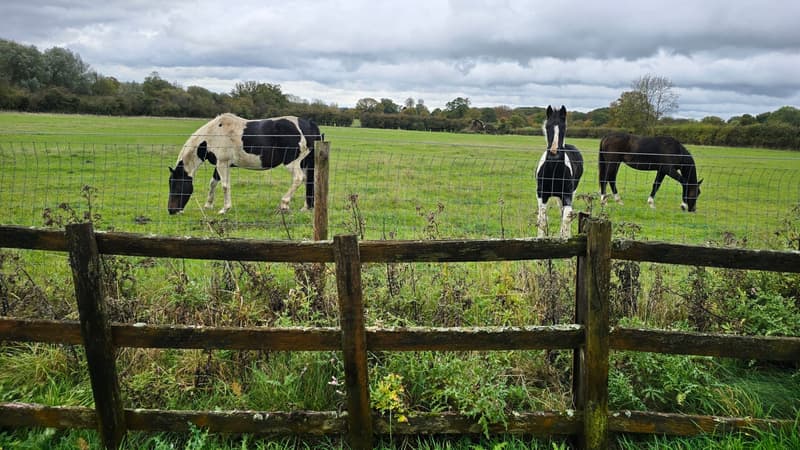
Public rights of way
Many rural properties have a footpath or bridleway across them. Natural England says that, as the owner or occupier, you must keep the route visible and not obstruct or endanger users Natural England. In particular, you must:
- avoid putting obstructions on or across the route, such as permanent or temporary fences, walls, hedgerows, padlocked gates or barbed wire
- stop vegetation encroaching on the route from the sides or above
Obstructing a public right of way is a criminal offence. The highway authority can demand that you remove an obstruction, and can remove it itself if you don't Natural England.
If a stile or gate on a right of way is your responsibility, you must keep it safe and reasonably easy to use. You can claim 25% or sometimes more of the cost of replacing it from the highway authority Natural England. Natural England suggests discussing with the authority whether to replace a stile with a gate Natural England.
If you keep cattle in England or Wales, note that bulls of recognised dairy breeds over 10 months old are banned by law from fields containing a public right of way. Bulls over 10 months of other breeds must be accompanied by cows or heifers Natural England Wildlife and Countryside Act 1981, s59.
Barbed wire next to roads
In England and Wales, under section 164 of the Highways Act 1980, if a barbed wire fence next to a highway is a nuisance, meaning it's likely to injure people or animals lawfully using the road, the highway or local authority can serve a notice requiring you to deal with it. The notice gives you between one and six months Highways Act 1980, s164. Along lanes used by walkers and riders, it's often better to set barbed wire back or use plain wire on the road side.
Fencing for horses
In England, Defra's statutory welfare code for horses, ponies and donkeys sets out fencing guidance. Breaching the code isn't an offence in itself, but courts can take it into account in welfare cases Defra horse welfare code. The code says Defra:
- fences should be sturdy, high enough to stop horses escaping, and designed and maintained to avoid injury, with no sharp projections
- gates should allow easy and safe passage and be securely fastened, and some may need padlocking
- barbed wire and sheep wire ideally shouldn't be used in horse fields. Where they're essential because other stock grazes too, they should be kept tight and well maintained
- plain wire should be made visible to horses
The code quotes British Horse Society recommendations: 1.08 to 1.38 m for horses, 1 to 1.3 m for ponies, a lower rail at about 0.5 m, and 1.38 to 1.8 m for stallions Defra. Electric fences should cause no more than momentary discomfort, with power units correctly earthed, and temporary electric tape shouldn't be the only boundary fence Defra.
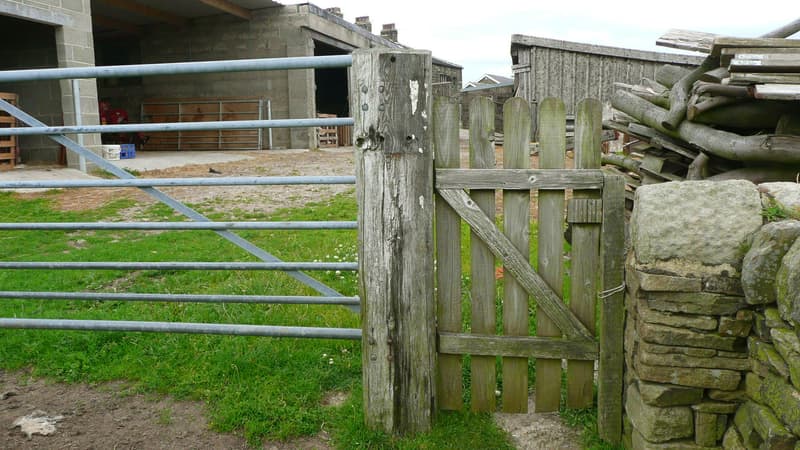
Livestock and liability
In England and Wales, the Animals Act 1971 makes the person whose livestock strays onto someone else's land liable for damage it does to the land or property, and for reasonable costs of keeping the animals until they can be returned Animals Act 1971, s4. Sound boundary fencing protects your neighbours and you.
Boundaries and who owns the fence
In England and Wales, there's usually no record of the exact boundary between two properties, or of who owns the hedge, wall or fence between them. Most title plans don't show exact boundaries GOV.UK. If you're replacing a boundary fence, talk to your neighbour first. You can record a boundary more precisely, for example with a boundary agreement GOV.UK.
Hedges as an alternative
A new hedge can be a good long-term boundary, and old countryside hedgerows are protected. There are rules to follow before removing one, with unlimited fines for breaking them, and you mustn't harm nesting birds. The main nesting season runs from 1 March to 31 August GOV.UK. If a fence replaces part of a hedge, plan the work outside the nesting season. Our guide to trees, hedges and the law explains the rules.
Choosing the right gate
Gates take far more wear than the fence around them, so it pays to specify them carefully:
- Width. Field gates need to be wide enough for the largest vehicle that will use them, such as a tractor and trailer, a hedge-cutting flail or an oil or LPG tanker. Measure the turning space as well as the gap.
- Posts. Most gate problems start with the hanging post. A heavy gate needs a substantial post set deep enough to stop it leaning, plus a separate shutting post.
- Self-closing and latching. Where livestock or horses graze, a gate that swings shut and latches reliably prevents escapes. Defra's horse code asks for gates that are fastened securely Defra.
- Automated entrance gates. On long drives these need a power supply, safety sensors and a plan for power cuts, such as a manual release or battery backup. Wiring should be done by a qualified electrician.
Getting a good quote
- Posts: size, timber treatment and spacing, and how strainers and gate posts will be set.
- Wire or rails: the mesh specification, number of lines, and whether barbed wire is included.
- Ground conditions: rock, slopes and wet ground can change the price a lot, so ask for a site visit.
- Old fencing: who removes and disposes of it.
- Gates: hanging, latches, and whether posts are concreted or driven.
Frequently asked questions
Do I need planning permission for a fence in the countryside?
In England, not usually if it's no higher than 1 m next to a road used by vehicles or 2 m elsewhere, and not around a listed building GPDO Part 2.
Can I put a gate across a public footpath?
You mustn't obstruct a right of way, for example with a padlocked gate. Obstruction is a criminal offence Natural England. Talk to the highway authority before putting in any new structure.
How high should a horse fence be?
Defra's welfare code for England quotes British Horse Society guidance of 1.08 to 1.38 m for horses and 1 to 1.3 m for ponies, with a lower rail at about 0.5 m Defra.
Can I use barbed wire next to a road?
You can, but in England and Wales, if it's likely to injure people or animals using the road, the council can require you to deal with it within one to six months Highways Act s164.
Who is responsible if my sheep get into a neighbour's garden?
In England and Wales, the owner of straying livestock is liable for damage it causes and for reasonable costs of keeping it Animals Act 1971.