A rural home often comes with more land than a garden centre's advice was written for: a paddock or two, long hedges, verges along the drive, an orchard and rough ground at the edges. Keeping it in shape takes regular work, and if you keep horses or let grazing to a neighbour, some of it is about animal welfare, not just tidiness. This guide covers paddock management, poisonous plants, ragwort, hedge-cutting rules and how to plan grounds work over the year. It uses Defra's horse welfare code, GOV.UK and legislation.
If you need regular help, see our grounds maintenance page or use the form on this page. We look for up to 3 local suppliers who cover your area.
How much grazing do you need?
In England, Defra's code of practice for horses, ponies and donkeys says the pasture needed per horse depends on the grass, ground conditions, time of year, type of horse and how well the pasture is managed. As a general rule, each horse needs roughly 0.5 to 1.0 hectares (1.25 to 2.5 acres) of suitable grazing if it isn't given supplementary feed. Each donkey needs a minimum of 0.2 to 0.4 hectares (half to one acre) Defra horse welfare code.
Too many animals on too little land leads to bare, muddy, weedy paddocks. That's when ragwort and other weeds take hold.
Good pasture management
The code says a good pasture management programme is needed to avoid overgrazing, help worm control, maintain good drainage and control weeds. That includes picking up droppings, rotating grazing areas and, where possible, taking horses off very wet ground to prevent poaching, where hooves churn the pasture into mud Defra horse welfare code. In muddy conditions, a horse should have a well-drained area to stand and lie on Defra horse welfare code.
In practice, a grounds contractor can help with:
- Topping: cutting rough grass and weeds after grazing to encourage even regrowth
- Harrowing and rolling in spring to spread droppings, pull out dead grass and level poached ground
- Weed control, including spot-treating docks and thistles
- Overseeding bare and poached patches
- Drainage of persistently wet gateways and low spots. See our drainage page.
Poisonous plants and trees
The code says fields should be kept clear of dangerous objects and poisonous plants. Some plants and trees, such as privet, yew and laburnum, are extremely toxic to horses, so horses should never have access to them or their clippings Defra horse welfare code. Some risks are seasonal, for example sycamore seeds and oak trees, which are most dangerous in autumn when they shed acorns Defra horse welfare code.
Grass cuttings aren't suitable for horses to eat, so take care that they don't get access to garden waste or cut fields Defra horse welfare code. That's a common mistake when a mower contractor or well-meaning neighbour tips clippings over the paddock fence.
Ragwort, thistles and docks
All parts of ragwort are toxic to horses and humans, even when cut, pulled, treated or wilted. It should be removed and carefully disposed of from land used by horses or to produce forage, wearing gloves. Flowering ragwort can still seed after removal, with a 70% germination rate Defra horse welfare code.
In Great Britain, the Weeds Act 1959 lets the government require an occupier to stop spear thistle, creeping thistle, curled dock, broad-leaved dock and ragwort spreading Weeds Act 1959. Defra's ragwort code of practice explains how to assess and manage the risk Defra. For invasive non-native plants such as Japanese knotweed and Himalayan balsam, see our invasive plants guide.
Water and shelter
All horses need continuous access to a clean supply of fresh water. An average adult horse can drink 25 to 50 litres a day, more in hot weather. Troughs should be cleaned regularly, and in cold spells, ice needs breaking regularly Defra horse welfare code. The code notes that natural water sources such as streams aren't always suitable Defra horse welfare code.
Horses need shelter from prevailing winds, summer sun and flies. That can be natural, such as trees or hedges, or a field shelter. Donkeys need roofed shelters with solid walls, as they aren't well adapted to wet and cold Defra horse welfare code. Before putting up a new field shelter, check with the council whether you need planning permission.
Fencing and gates
Fences should be sturdy and high enough to stop horses escaping, with no sharp projections. Barbed wire and sheep wire ideally shouldn't be used where horses graze, and plain wire should be made visible Defra horse welfare code. Our fencing and gates guide covers recommended heights and the law on boundaries.
Hedges: when you can cut
In England, hedgerows on or next to land used for agriculture, which includes grazing land and land used for keeping horses and ponies, must not be cut or trimmed from 1 March to 31 August. You also must not cause or permit someone else to do it Rural Payments Agency. The rules apply to hedgerows over 20 m long, or shorter ones that meet another hedgerow at each end Rural Payments Agency.
There are exemptions, for example where a hedge obstructs or endangers users of a road or right of way, for hedge-laying or coppicing from 1 March to 30 April, and for hedges within or marking the boundary of a house's garden. You must keep a record of work done under an exemption, and only cut what's needed Rural Payments Agency.
These rules came into force on 23 May 2024. The Rural Payments Agency says it takes an outcome-focused approach, but enforcement can include stop, compliance and restoration notices, monetary penalties or prosecution Rural Payments Agency. They're Rural Payments Agency rules for England. Wales, Scotland and Northern Ireland have their own rules for farmed land, so check before cutting there.
Separately, it's an offence to intentionally take, damage or destroy a wild bird's nest while it's in use or being built Wildlife and Countryside Act, s1 (in Northern Ireland, the Wildlife (Northern Ireland) Order 1985 Wildlife (NI) Order 1985), so check hedges before cutting even outside the closed season. For tree work and hedge law, see our trees and hedges guide and our tree surgery and hedges page.
Big gardens, verges and orchards
Beyond the paddock, most rural properties have long verges along the drive, rough grass under trees and boundaries that need attention. Some things make the work easier and safer:
- Mow paths, leave margins. Mowing paths through long grass and cutting margins once or twice a year keeps things tidy and leaves cover for wildlife. Cut after flowering and seeding if you want wildflowers.
- Keep visibility at the gate. Where your drive meets the road, keep hedges and verges low enough to see traffic. Our farm tracks guide explains why.
- Prune fruit trees in winter, and clear windfalls in paddocks used by horses.
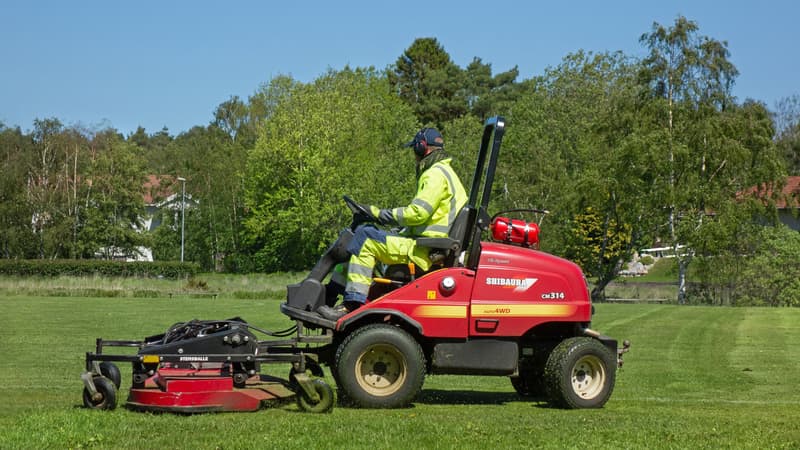
- Look after machinery. Ride-on mowers and compact tractors on slopes and wet ground need care. Service them annually, and keep blades sharp and guards in place.
Hiring a grounds contractor
For larger properties, a regular grounds contractor is often cheaper than buying and maintaining equipment. When you get quotes, ask:
- what's included: mowing, topping, hedges, weed control, waste removal
- whether they hold the right certificate for herbicide use if spraying is involved
- how they'll handle ragwort, clippings and green waste so none ends up where livestock can reach it
- whether they understand the hedge-cutting dates and nesting bird law
- whether they have public liability insurance
A year of grounds work
- Autumn (Sept to Nov): cut hedges once nesting is over, collect acorns and sycamore seeds from horse paddocks, clear gutters and ditches, and service mowers before storing them.
- Winter (Dec to Feb): repair fences and gates, plan drainage work, coppice and lay hedges, and rest wet paddocks.
- Spring (Mar to May): harrow and roll paddocks, overseed bare patches, and start mowing and verge cutting. Watch for ragwort rosettes.
- Summer (Jun to Aug): top paddocks, pull ragwort before it seeds, keep troughs clean and topped up, and keep paths and visibility splays cut.
Frequently asked questions
How many acres do I need per horse?
Defra's code for England suggests roughly 0.5 to 1.0 hectares (1.25 to 2.5 acres) per horse without supplementary feed Defra horse welfare code.
Which trees are poisonous to horses?
The code names privet, yew and laburnum as extremely toxic, and warns about sycamore seeds and acorns in autumn Defra horse welfare code.
When can I cut hedges around a paddock?
In England, hedgerows on or next to agricultural land, including horse grazing, can't be cut from 1 March to 31 August unless an exemption applies Rural Payments Agency.
Can horses eat grass clippings?
No. The code says grass cuttings aren't suitable for horses to eat Defra horse welfare code.
Do I have to remove ragwort?
Ragwort should be removed from land used by horses or for forage Defra horse welfare code, and the government can require occupiers to stop it spreading Weeds Act 1959.