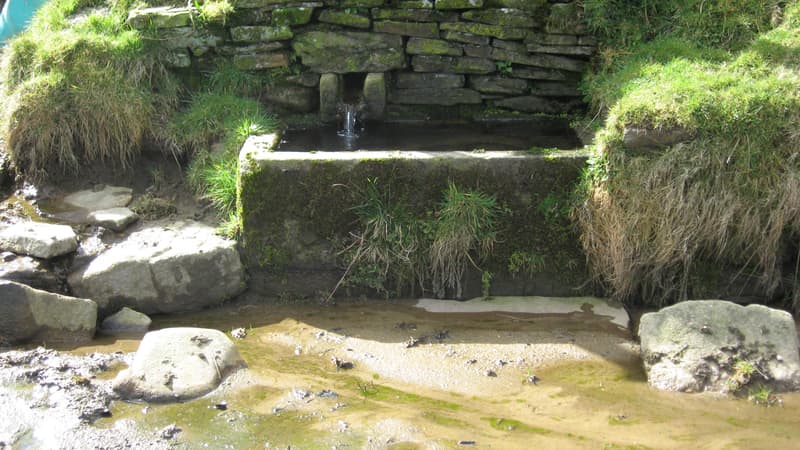
Hundreds of thousands of UK homes don't get their water from a water company. Instead it comes from a borehole, well, spring, stream or loch, and the owner is responsible for keeping it safe. This guide explains who regulates private supplies in each nation, how testing works, what treatment you might need, how to protect your tanks and pipes, and where to find grants.
If you need a borehole surveyed, a pump replaced or a treatment system fitted, use the form on this page. We look for up to 3 local suppliers who cover your area.
How many homes rely on a private supply?
In England, the Drinking Water Inspectorate recorded 34,859 private supplies in 2024, serving a population of 849,800 Drinking Water Inspectorate. In Scotland, the Scottish Government says around 3% of the population get their drinking water from private supplies, mostly in remote and rural areas, using sources like lochs, streams and boreholes Scottish Government.
A private supply can serve a single cottage or be shared between a group of houses, a farm and holiday lets. That matters, because the rules on testing depend on who uses the water.

Who regulates private water supplies?
England and Wales
Local councils are responsible for private supplies, with the Drinking Water Inspectorate overseeing the system and working with health protection teams Drinking Water Inspectorate. In England, councils don't have to risk-assess or monitor a supply to a single dwelling that isn't let, but they must do so if the owner or occupier asks DWI.
Scotland
Scotland's Drinking Water Quality Regulator explains that larger supplies, or those with a commercial activity, are "regulated" supplies, and smaller supplies that only serve domestic properties are "exempt" supplies, with different legislation for each DWQR.
mygov.scot says your council must keep a register of all private supplies, and you should tell the council when you set one up. If your supply serves a business or rental property (including holiday lets), more than 50 people, or more than 10 m³ of water a day, you must have the council test it at least once a year and risk-assess it at least once every 5 years, and let users know the water is from a private supply. If your supply is small or you're the only user, you can still ask for tests and risk assessments mygov.scot.
Northern Ireland
A supply to a single private dwelling isn't required to be monitored by the Drinking Water Inspectorate for Northern Ireland, but you can ask your council's environmental health department to test it DAERA.
Why testing matters
Private supplies can be excellent, but quality varies. Scotland's regulator says some supplies are very good, with adequate treatment and good management, while others present a risk to health, and outbreaks of disease linked to private supplies have occurred in Scotland DWQR.
A test tells you what you're dealing with: bacteria, cloudiness, colour from peat, iron, manganese or acidity. Without one, you can't choose the right treatment. Contact your council's environmental health team first. In Scotland, mygov.scot says they can tell you about registering, risk-assessing and testing the supply, and any costs involved mygov.scot.
Renting out or selling a property
In Scotland, landlords must tell tenants they're using a private supply, and tenants can ask for risk assessment and test results. If you're selling, you can ask the council to test the supply to show it's safe, and buyers can ask for that proof mygov.scot. If you let a property on a private supply elsewhere in the UK, ask your council which rules apply.
Treatment options
mygov.scot says a private supply will always need a disinfection treatment to kill harmful bacteria, may need filters to remove dirt and solids, and may need pH correction to prevent pipe corrosion and skin irritation. It recommends leaving the choice of treatment to a specialist mygov.scot: treatment.
UV disinfection
UV is the most common disinfection option. A UV system uses lamps to kill bacteria and doesn't change the taste of the water. But mygov.scot points out some important limits:
- the UV light has to pass through the water, so it won't work on very cloudy or coloured water, for example from peaty soils
- iron and manganese can reduce its effectiveness
- it needs a power supply
- lamps get less effective over time and typically need replacing every year, and the quartz sleeve needs regular cleaning
- an alarm that warns you if the lamp stops working is recommended
Source: mygov.scot: treatment. Other disinfection options, such as chlorine or chlorine dioxide, need a specialist to install them mygov.scot.
Filters
Cartridge filters remove particles, sediment, metals and some bacteria. You may need several filters of different sizes, measured in microns, and mygov.scot advises placing them in size order with the largest micron size furthest from the tap mygov.scot. Filtering first also helps the UV unit work properly.
Specialist treatment
Depending on the test, a supplier may recommend pH correction, iron and manganese removal, or a softener. A softener deals with hardness but doesn't disinfect water. See our water treatment page for more.
Protecting your tanks and pipes
Treatment is only part of the job. mygov.scot suggests these steps to protect a water tank from contamination mygov.scot: maintenance:
- dig a ditch around it to catch runoff
- fence it to keep animals and their waste out
- make sure all tank covers fit well
- cover the ends of inlet pipes with fine mesh to stop small animals getting in
- clean the tank regularly to stop dirt and sediment building up
It also warns that collecting water in tanks made of lead, or tanks previously used to store oil or other chemicals, is dangerous, and recommends getting an approved plumber to replace them and looking for the Water Regulations Approval Scheme logo when choosing a new tank mygov.scot.
To help stop pipes freezing, mygov.scot suggests insulating sleeves or laying pipes underground, keeping pipes and tanks out of sunlight where possible and away from heat sources so the water stays cold mygov.scot.
Make a maintenance plan
mygov.scot recommends a simple plan of what to check weekly, monthly and yearly, which can be as simple as a diary noting when to check, clean or replace equipment. If a company installed your equipment, it can tell you how to maintain it, and your council can also advise mygov.scot.
A typical plan might include:
- Weekly: check the UV unit's indicator or alarm and look at the water for cloudiness or colour
- Monthly: check filter housings and pressure, and look over the source, tank covers and fences
- After heavy rain or a dry spell: check the source and the clarity of the water
- Yearly: replace the UV lamp, clean the tank, service the pump and consider a water test
Plan for emergencies
mygov.scot warns that if you rely on a private supply, you need to plan how you'll get water in an emergency such as a drought or storm mygov.scot. A borehole pump and a UV unit both need electricity, so a power cut can leave you without safe water. Keep some bottled water, know where your stopcock and pump controls are, and consider a backup power supply. Our winter preparedness guide covers power cuts in more detail.
Grants and costs
In Scotland, you can apply for a grant of up to £800 per property to improve a private supply, for example to install treatment, replace lead pipes or put in new tanks. It can't be used for ongoing maintenance or to connect to the mains, the supply must be the main or only source of drinking water, and you can't get it if the work has already started or for a new house. Your council runs the scheme mygov.scot: grant.
mygov.scot also notes that installing and maintaining a private supply can be expensive and take a long time, and suggests considering a mains connection where one is possible mygov.scot. For more on what to budget, see our private water supply costs page. Borehole and treatment prices depend on depth, geology and what the test shows, so ask suppliers for itemised quotes.
Getting quotes
When you ask for quotes, tell suppliers what kind of source you have, how many people and properties it serves, any test results, and what's already installed. Ask each one for a written service schedule and running costs. Use the form on this page, and read our private water supply and boreholes page.
Frequently asked questions
Do I have to get my private water supply tested?
It depends on the supply. In Scotland, supplies serving a business or rental property, more than 50 people or more than 10 m³ a day must be tested by the council at least once a year mygov.scot. In England, councils don't have to monitor a single unlet dwelling but must do so if the owner or occupier asks DWI.
Does a private water supply need UV treatment?
mygov.scot says a private supply will always need a disinfection treatment to kill harmful bacteria, and UV is the most common option mygov.scot.
How often should a UV lamp be replaced?
mygov.scot says UV lamps get less effective over time and typically need replacing annually mygov.scot.
Is there a grant for private water supplies?
In Scotland, yes: up to £800 per property towards improvements such as treatment, lead pipe replacement or new tanks, through your council mygov.scot.
Can I use an old oil tank to store water?
No. mygov.scot warns it's dangerous to collect water in tanks made from lead or previously used to store oil or other chemicals mygov.scot.