Rural homes usually deal with their own water. Rain from roofs and yards goes to soakaways or ditches, sewage goes through a septic tank or treatment plant to a drainage field, and fields and gardens rely on old land drains that nobody has mapped. When something blocks or fails, it's usually the owner's problem. This guide explains how the different parts work, the rules from Approved Document H (England's building regulations guidance on drainage) and GOV.UK, and what to do when water won't go away.
For help with blocked drains, soakaways or ditch work, see our drainage page or use the form on this page. We look for up to 3 local suppliers who cover your area.
Three different kinds of drainage
- Foul water: toilets, sinks, showers and appliances. Without a sewer this goes to a septic tank or treatment plant, then a drainage field or, for some systems, a watercourse.
- Surface (rain) water: from roofs, yards and drives. This should go to a soakaway, a watercourse or, as a last resort, a sewer.
- Land drainage: field drains and ditches that carry groundwater and runoff away from land.
Keeping them separate matters. Septic tanks, treatment plants and drainage fields are designed for the foul water a household produces, not storm runoff from roofs and yards. Our septic tank maintenance guide covers foul drainage in detail.
Where rainwater must go: the order of priority
Requirement H3 of the Building Regulations (England) sets an order of priority for rainwater from roofs and paved areas. It should discharge to Approved Document H:
- an adequate soakaway or other infiltration system; or, where that isn't reasonably practicable,
- a watercourse; or, where that isn't reasonably practicable,
- a sewer.
Foul water has its own order: a public sewer, then a private sewer connecting to one, then a septic tank with secondary treatment or another wastewater treatment system, and only then a cesspool Approved Document H.
Soakaways: where and how
A soakaway is a pit or crate system that stores roof or yard water and lets it seep into the ground. Approved Document H says infiltration devices should not be built Approved Document H:
- within 5 m of a building or road, or in areas of unstable land
- in ground where the water table reaches the bottom of the device at any time of year
- so close to drainage fields, drainage mounds or other soakaways that the ground's overall soakage capacity is exceeded
- where runoff may be contaminated and could pollute groundwater
Percolation tests should be carried out to find the soil's capacity. For small soakaways serving 25 m² or less, a design rainfall of 10 mm in 5 minutes may be assumed as the worst case Approved Document H. Larger areas should be designed to the standards listed in the document.
The percolation test
Approved Document H describes the test: dig a 300 mm square hole 300 mm below the proposed pipe invert, fill it with at least 300 mm of water and let it drain overnight. The next day, refill it and time how long the water takes to fall from 75% to 25% full (150 mm). Divide the seconds by 150 to get the average time (Vp) for the water to drop 1 mm. Repeat at least three times in at least two holes, and don't test in heavy rain, severe frost or drought Approved Document H.
The guidance also describes good and poor subsoils. Brown, yellow or reddish subsoils are usually well drained, while grey or blue subsoils, or brown and grey mottling, suggest periodic saturation. Sandy clay, silty clay and clay usually drain poorly Approved Document H. On heavy clay, a soakaway may not work at all, which is why many rural properties discharge rainwater to a ditch instead.
Drainage fields for septic tanks and treatment plants
In England, a septic tank must discharge to ground through a drainage field, not to a watercourse. A drainage field is a series of perforated pipes in trenches, laid out so the wastewater trickles through the ground for further treatment GOV.UK. Approved Document H says a drainage field should only be used where percolation tests give an average Vp of between 12 and 100 and the site assessment and trial holes are favourable Approved Document H.
The general binding rules say you must have your system repaired or replaced if it isn't in good working order. Signs include blocked pipes, water not draining properly (such as pools around the drainage point) and sewage smells GOV.UK. Soggy, smelly ground over the drainage field is a warning sign that needs a specialist, not just a drain rod.
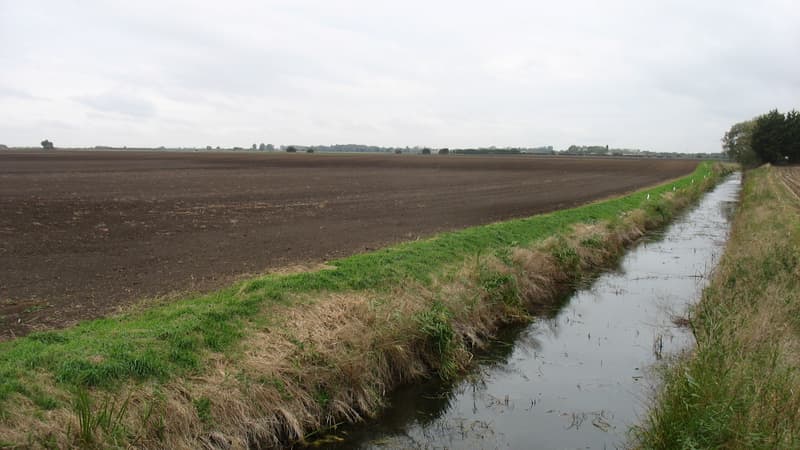
Ditches and watercourses: your duties
If a watercourse runs through or alongside your land, you normally own it, up to the centre if it's on the boundary, unless your deeds say otherwise. A watercourse includes ditches, culverts and channels that are dry for long periods GOV.UK. As an owner, you must let water flow naturally. You may have to remove blockages, fallen trees or overhanging branches if they reduce the flow or cause flooding to other landowners, and you may have to pay damages if they do GOV.UK.
GOV.UK also says you should GOV.UK:
- keep trash screens, weirs and other structures clear
- not put garden waste, including grass cuttings, on the banks or in the water
- get Environment Agency agreement before using herbicides within 1 m of the top of the bank
- never go inside a culvert: you could get trapped or poisoned by gases
Permission for ditch and culvert work
You must find out which permissions you need to maintain, repair, build or remove anything in or around a watercourse, including culverts, banks and removing material from the bed. You could be fined or imprisoned if you don't GOV.UK. Authorities are unlikely to give permission for a new culvert, because culverts can increase flood risk GOV.UK. On a main river, you may need an environmental permit from the Environment Agency, including for work within 8 m of the river GOV.UK. On other watercourses, contact the lead local flood authority or internal drainage board GOV.UK. You must also ask permission before doing any work within 8 m of a flood defence GOV.UK.
Tracks and gateways often cross ditches. See our farm tracks guide before piping a ditch.
Land drains
Many fields and gardens have old clay-pipe or stone land drains, often decades old and unmapped. They silt up, get crushed by machinery or are cut by new trenches. Signs of failure include wet patches that never dry, rushes appearing in grass and ditch outfalls that no longer run after rain. A drainage contractor can trace them with a camera or by digging trial holes, and repair or replace sections. If a land drain outfalls into a watercourse, the watercourse rules above apply to any work at the outfall.
Blocked drains and pipes
Common causes on rural properties are tree roots, collapsed old pipes, fat and wipes, silt from yards, and pipes sagging where the ground has moved. Approved Document H sets out access points and inspection chambers so drains can be cleared Approved Document H, but old houses often have few. A CCTV drain survey shows exactly where a blockage or collapse is before anyone digs.
- Never put wipes, fat or oil down drains. In a septic system they also harm treatment.
- Keep yard silt and gravel out of gullies.
- Know where your inspection chambers are, and keep them accessible.
- Don't plant trees over drain runs or drainage fields.
Scotland, Wales and Northern Ireland
Approved Document H is guidance for building work in England Approved Document H, and the watercourse guidance above is for England. Scotland has its own building standards, and SEPA regulates discharges and work in watercourses there. In Wales, Natural Resources Wales and the council fill similar roles, and in Northern Ireland, DAERA and the councils do. The engineering principles are the same: soakaways need suitable ground, a safe distance from buildings and a water table that stays below them. But check the local rules and permissions before starting work, especially anything in or near a watercourse.
Frequently asked questions
How far must a soakaway be from a house?
In England, Approved Document H says infiltration devices should not be built within 5 m of a building or road Approved Document H.
Can I run rainwater into my septic tank?
Rainwater should go to a soakaway, then a watercourse, then a sewer, in that order Approved Document H. Keep it out of the septic tank, as extra water can overload the system.
Who is responsible for the ditch on my boundary?
Normally you own it up to the centre, unless your deeds say otherwise, and you must let water flow naturally GOV.UK.
Can I pipe or culvert a ditch?
You need permission, and authorities are unlikely to give it for a new culvert GOV.UK.
What does a percolation test show?
How quickly water drains into the soil (Vp), which tells you whether a soakaway or drainage field will work Approved Document H.